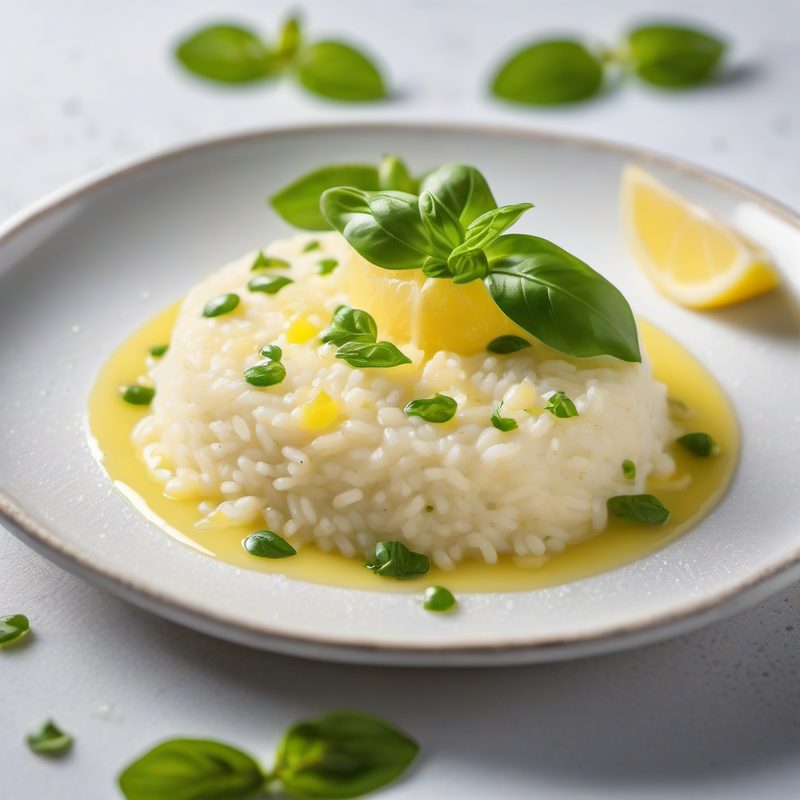
Lemon, Parmigiano & Basil Risotto
A bright, elegant risotto where lemon brings freshness without a hint of sourness — zest added off the heat to preserve its aromatic oils, a silky Parmigiano mantecatura, and vivid drops of basil oil for color and perfume.
| Amount | Ingredient |
|---|---|
| 11¼ oz (320 g) | Carnaroli rice |
| 4 cups (1 L) | light vegetable stock, kept hot |
| ⅓ cup (80 ml) | dry white wine |
| 1½ oz (40 g) | shallot, finely minced |
| 1 tbsp (15 ml) | extra-virgin olive oil |
| 1 | organic lemon, zest finely grated |
| 1½ tbsp (20 ml) | fresh lemon juice, strained |
| ½ cup (70 g) | Parmigiano Reggiano, finely grated |
| 2¾ tbsp (40 g) | unsalted butter, cold and diced |
| ¾ tsp (4 g) | fine sea salt, plus more as needed |
| ¼ tsp (1 g) | black pepper, freshly ground |
| For the basil oil | |
| 1 oz (30 g) | fresh basil leaves, stems removed |
| ⅓ cup (80 ml) | extra-virgin olive oil |
| ¼ tsp (1 g) | fine sea salt |
This is the risotto that photographs like a dream: ivory rice, bright green basil oil, and yellow lemon zest on a clean white plate. The technique is what makes it special — the lemon juice is added gradually (lemons vary wildly in acidity), and the zest goes in only during the off-heat mantecatura, so its volatile citrus oils stay fresh and fragrant instead of turning bitter in the stock. A blanched-basil oil keeps its intense green. Bright, clean, and quietly luxurious.
Ingredient notes: Use an organic lemon — you're grating the zest, so you want unwaxed fruit. The basil oil is blanched first so it stays intensely green. Don't skip the straining for a restaurant-style finish; the oil is what makes the plate pop.
- Small saucepan (for blanching)
- Blender (for the basil oil)
- Fine sieve
- Wide saucepan (for the risotto)
- Wooden spoon
- Ladle
- Warm serving plates
- Make the basil oil (10 min). Bring a small saucepan of water to a boil. Blanch the basil 10 seconds, then transfer immediately to ice water. Drain and dry the leaves very thoroughly. Blend with the olive oil and salt until intensely green and smooth — strain through a fine sieve for a restaurant finish. The blanching deactivates the enzymes responsible for oxidation, keeping the oil vivid green.
- Start the base (4 min). Heat the olive oil in a wide saucepan over medium-low heat. Add the shallot and sauté gently 3-4 minutes without browning.
- Toast the rice (2 min). Add the Carnaroli and toast about 2 minutes, stirring frequently, until the grains are hot and slightly translucent at the edges.
- Deglaze (1 min). Add the white wine and let it reduce almost completely.
- Cook the risotto (14-16 min). Add enough hot stock to barely cover the rice. Cook at a gentle simmer, stirring regularly and adding more stock gradually as the previous addition is absorbed, for 14-16 minutes. Keep the risotto slightly loose toward the end.
- Add the lemon (1 min). About 1 minute before the rice is ready, add 10 ml of the lemon juice. Taste — add the remaining juice only if you want greater acidity. Lemons vary considerably; gradual addition prevents the citrus from overpowering the Parmigiano.
- Mantecatura (2 min). Remove the pan completely from the heat. Wait 30 seconds, then add the cold butter, Parmigiano, black pepper, and about two-thirds of the lemon zest. Stir and shake vigorously until glossy and creamy, adding a little hot stock if needed for the all'onda consistency. The off-heat zest preserves its volatile citrus oils — a much fresher lemon aroma.
- Plate (2 min). Spoon onto warm, flat plates, tapping underneath to spread naturally. Drizzle 5-6 small drops of basil oil over each serving. Finish with the remaining lemon zest, a few very small basil leaves, a light dusting of Parmigiano, and freshly ground pepper.
- Never cook the zest in the stock. Long cooking extracts not only fragrant oils but increasingly bitter compounds from the peel.
- Zest off the heat, always. The mantecatura is the moment — the volatile oils stay fresh.
- Resist the cream. A proper mantecatura gives all the creaminess needed while keeping the lemon clean and vibrant.
- Add juice gradually. Lemon acidity varies enormously — taste as you go.
- Blanch the basil. Ten seconds in boiling water, then ice — the oil stays intensely green.
- Dry the basil thoroughly. Waterlogged leaves make a cloudy, dull oil.
| Mistake | Why It Hurts | The Fix |
|---|---|---|
| Cooking the zest in the stock | Bitter compounds | Zest only off the heat |
| All the juice at once | Sour, lemon-heavy risotto | 10 ml first, taste, then more |
| Adding cream | Muddies the clean lemon | Proper mantecatura instead |
| Unblanched basil oil | Brown, dull green | Blanch 10 sec + ice bath |
| Wet basil leaves | Cloudy oil | Dry very thoroughly |
| Over-salting | Masks the lemon | Taste before adding salt |
- Lemon & Mint: Swap the basil oil for mint oil.
- Vodka-Lemon: A splash of vodka with the wine for brightness.
- Burrata Lemon: Tear burrata over the top.
- Asparagus Lemon: Fold in blanched asparagus spears.
- Basil Pesto Twist: A spoonful of pesto in the mantecatura.
| Storage Method | Details |
|---|---|
| Refrigerator | Store in an airtight container for up to 2 days. |
| Freezer | Not recommended — the creamy emulsion breaks. |
| Reheating | Don't reheat as risotto — transform leftovers into small lemon and Parmigiano risotto cakes, shallow-fried until crisp. |
Bright and elegant, this pairs with:
- Vermentino — Crisp, saline, citrusy.
- Gavi di Gavi — Mineral and refined.
- Sauvignon Blanc — Herbal notes match the basil.
- Franciacorta Brut — Bubbles for a special plate.
| Per Serving (about 1¼ cups) | |
|---|---|
| Calories | 510 |
| Protein | 14 g |
| Fat | 19 g |
| Carbohydrates | 70 g |
| Fiber | 2 g |
Nutrition values are approximate and will vary with brand choices and substitutions.
Why add the zest only at the end?
Long cooking extracts not just fragrant oils but increasingly bitter compounds from the peel. Adding it off the heat preserves the fresh, volatile citrus aroma.
Why not use cream?
A properly executed mantecatura gives this risotto all the creaminess it needs — cream would muddy the clean, vibrant lemon.
Why blanch the basil?
It deactivates the enzymes responsible for oxidation, so the basil oil keeps its vivid green color instead of browning.
Do I use all the lemon juice?
Start with 10 ml and taste. Lemons vary considerably in acidity — add the rest only if you want more.
What do I do with leftovers?
Make small lemon and Parmigiano risotto cakes, shallow-fried until crisp — the same treatment as classic riso al salto.
- Risotto al Limone e Provola (Volume 3)
- Risotto all'Arancia (Volume 3)
- Risotto allo Zafferano (Volume 3)
Recipe from "The Italian Kitchen" by Vita Milanese — Volume 3: Risotto & Rice
Recipe from The Italian Kitchen by Vita Milanese — Volume 3 · Risotto & Rice. Discover all volumes on the ebook page.