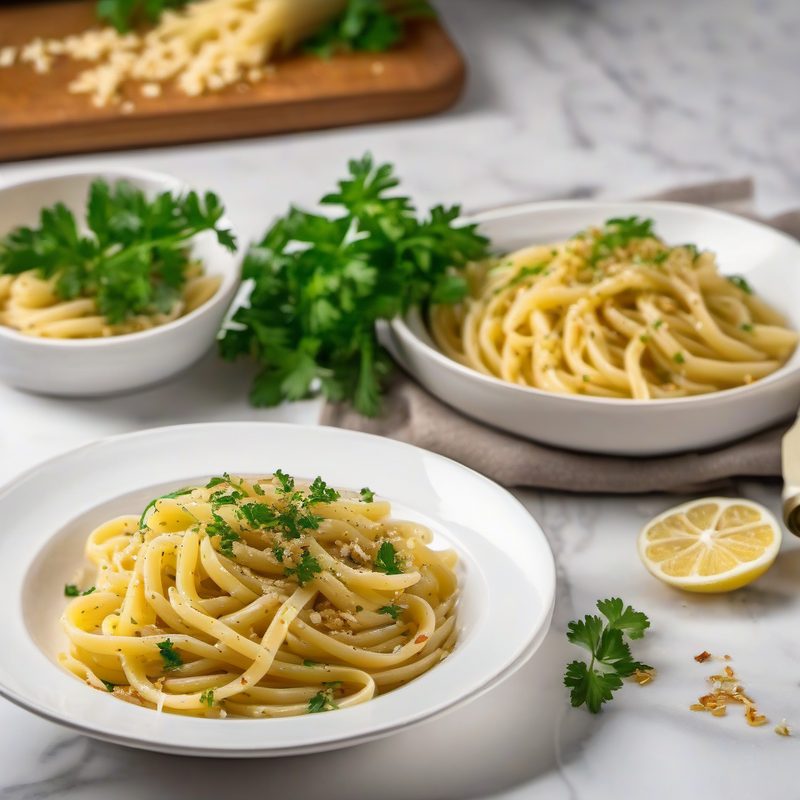
Tagliatelle Cream Ham
Silky ribbons of egg pasta enveloped in a luscious cream sauce studded with tender ham — this Roman-inspired classic proves that three ingredients, treated with care, can deliver a bowl of pure, soul-warming comfort in under fifteen minutes.
| Amount | Ingredient |
|---|---|
| 350 g (12 oz) | tagliatelle |
| 200 ml (¾ cup + 2 tbsp) | heavy cream |
| 150 g (5 oz) | cooked ham, diced |
| 50 ml (3 tbsp + 1 tsp) | extra virgin olive oil |
| 1 | shallot, finely chopped |
| — | salt, for pasta water |
| — | grated Parmigiano-Reggiano or Grana Padano, for serving |
Some dishes earn their place in the canon through sheer elegance born of simplicity, and tagliatelle panna e prosciutto is a shining example. This is the weeknight hero you turn to when the refrigerator is sparse but the craving for something deeply satisfying is not. The sauce comes together in the time it takes to boil the pasta — a gentle bloom of shallot in olive oil, a quick warm-through of the ham, and a slow, patient swirl of heavy cream. No stock, no wine, no complications.
What elevates this beyond a mere pantry dump is the quality of the few ingredients and the technique. The cream should never boil, only whisper; the pasta should be drained a moment before al dente so it can finish cooking in the sauce, drawing it into each ribbon. The finished dish glistens, each strand coated in a sauce that clings rather than pools. A final shower of sharp, aged cheese crowns it all.
It is a dish that asks little and gives much — a perfect entry point for the novice cook and a reliable standby for the seasoned one. Serve it simply, with nothing more than a green salad alongside, and you will understand why this combination has never gone out of style.
Note: For best results, seek out a thick-cut prosciutto cotto (cooked ham) from the deli counter rather than pre-packaged slices — the texture and flavour are markedly superior.
Equipment
- Large pot for pasta (5 L / 5 qt minimum)
- Large nonstick skillet or sauté pan
- Sharp chef's knife
- Cutting board
- Wooden spoon or silicone spatula
- Colander
- Grater
Preparation
Step 1 — Sauté the Shallot (3 min)
Place the large pot of salted water over high heat to come to a boil. While the water heats, heat 40 ml (2½ tbsp) of the extra virgin olive oil in a large nonstick skillet over medium-low heat. Add the finely chopped shallot and cook, stirring occasionally, until softened and translucent — about 2 minutes. Do not let the shallot brown; you want sweetness, not caramelization.
Step 2 — Warm the Ham (2 min)
Add the diced cooked ham to the skillet. Stir to coat in the oil and warm through for about 2 minutes. The ham is already cooked — you are merely taking the chill off and coaxing out its aroma.
Step 3 — Make the Cream Sauce (3 min)
Reduce the heat to the lowest setting. Pour in the heavy cream and stir constantly with a wooden spoon until the sauce is smooth and evenly combined, about 3 minutes. The cream should barely simmer — if you see bubbles larger than a gentle shiver, the heat is too high. Curdled cream cannot be saved.
Step 4 — Cook the Tagliatelle (5 min)
Add the remaining 10 ml (2 tsp) of olive oil and a generous amount of salt to the now-boiling water — the water should taste like the sea (about 1½ tbsp salt per 5 L / 5 qt). Drop the tagliatelle in and cook for about 5 minutes (or 1 minute less than the package suggests for al dente). Fresh tagliatelle cooks even faster — reduce to 2–3 minutes if using fresh pasta.
Step 5 — Combine and Serve (1 min)
Reserve about 125 ml (½ cup) of pasta cooking water before draining. Drain the tagliatelle well and add it directly to the skillet with the cream sauce. Toss vigorously over very low heat for 30–45 seconds, adding a splash of reserved pasta water if the sauce seems too thick. The starch-laden water helps the sauce cling to every ribbon. Serve immediately, passing grated Parmigiano-Reggiano or Grana Padano at the table.
Chef's Tips
- Use fresh tagliatelle if you can find it — the egg-rich ribbons absorb the cream sauce more readily than dried pasta.
- Reserve more pasta water than you think you need. The sauce tightens as it cools, and a splash of hot, starchy water brings it back to life.
- Grate your cheese at the table, not into the pan. Pre-grated cheese contains anti-caking agents that can make the sauce gritty.
- Try substituting prosciutto crudo (cured ham) for the cooked ham — its saltier, more complex flavour creates a notably different but equally delicious dish.
- A pinch of freshly grated nutmeg in the cream sauce is an optional but classic addition that rounds out the dairy.
Common Mistakes
| Mistake | Why It Hurts | The Fix |
|---|---|---|
| Boiling the cream | High heat causes the cream to separate into fat solids and whey, creating a grainy, broken sauce. | Keep heat on the lowest setting and stir constantly. The cream should steam, not bubble. |
| Overcooking the pasta | Tagliatelle continues cooking in the hot sauce; if it's already fully cooked when drained, it turns to mush. | Drain 1 minute before the package's al dente time and finish cooking in the sauce. |
| Skipping the pasta water | Without starch to bind them, the sauce slides off the pasta rather than coating it. | Always reserve and add a splash of pasta water when tossing. |
| Cold cream straight from the fridge | Cold cream shocks the pan and takes too long to heat through, increasing the risk of scorching. | Let cream sit at room temperature for 10 minutes before using, or warm it briefly in the microwave. |
Related Recipes
- Fettuccine Alfredo (#126)
- Penne Creamy Garlic Sauce (#123)
- Pasta Cream Ham (#96)
- Creamy Zucchini Shrimp Pasta (#93)
- Tagliatelle Artichokes (#170)
Search Tags
Photo reference: vol1_178.png
Recipe from "The Italian Kitchen" by Vita Milanese — Volume 1: Pasta Perfetto
Recipe from The Italian Kitchen by Vita Milanese — Volume 1 · Pasta Perfetto. Discover all volumes on the ebook page.