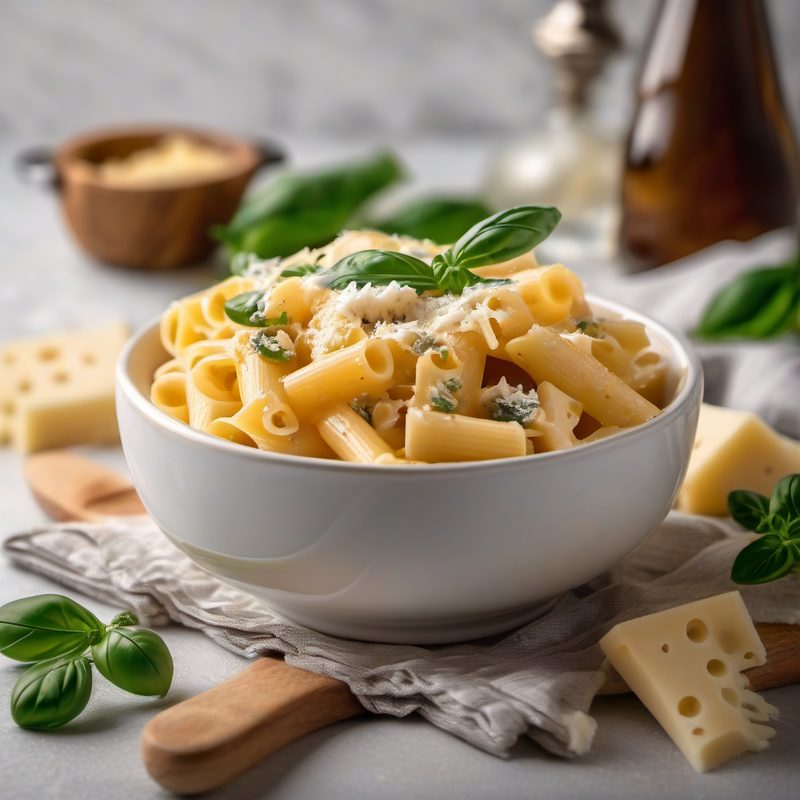
Tagliatelle Carbonara Asparagus
Homemade fresh tagliatelle tossed in a silky carbonara sauce — enriched with crisp pancetta, tender green asparagus, and finished with a shower of Parmesan — this is spring carbonara at its finest.
| Amount | Ingredient |
|---|---|
| 3 | Eggs (large, at room temperature) |
| 100 g (3.5 oz) | Pancetta (sliced, preferably ¼-inch / 6 mm thick) |
| 500 g (1 lb) | Green asparagus |
| 80 g (¾ cup) | Grated Parmesan (or Grana Padano) |
| — | Black pepper, freshly ground |
| — | Salt, for pasta water |
There's carbonara, and then there's carbonara with fresh pasta you made yourself and seasonal vegetables that make the whole dish sing. This recipe combines two of Italy's greatest culinary pleasures — the satisfaction of rolling out your own tagliatelle from scratch and the luxurious simplicity of a perfect carbonara. The fresh pasta, tender and eggy, is the ideal canvas for the classic sauce of eggs, cheese, and rendered pancetta fat, while bright green asparagus spears cut through the richness with their sweet, grassy flavor. It's a dish that respects tradition while celebrating the arrival of spring produce — the kind of meal that feels both indulgent and virtuous, complex and elemental. Yes, it takes a bit of work, but the result is a bowl of pasta that tastes like it was made with love, because it was.
*Includes 30 minutes rest time for the pasta dough.
For the Fresh Pasta
For the Carbonara Sauce
Use level tablespoons. All produce is medium unless specified. For the pasta, use the best eggs you can find — they are the soul of fresh pasta. For the carbonara, use guanciale if you can find it instead of pancetta; it's traditional and has a deeper, more complex flavor. The Parmesan can be substituted with Pecorino Romano for a sharper, saltier finish — or use a 50/50 blend of both.
🥘 Equipment
- Large mixing bowl or clean work surface (for pasta)
- Fork and bench scraper (for kneading)
- Plastic wrap
- Rolling pin or pasta machine
- Sharp knife or pasta cutter (for tagliatelle)
- Large pot (for pasta water)
- Large skillet or sauté pan
- Large mixing bowl (for tossing)
- Colander
- Chef's knife and cutting board
- Vegetable peeler (optional, for asparagus)
- Kitchen thermometer (optional, for egg safety)
📋 Preparation
Step 1 — Make the Fresh Pasta Dough (15 minutes + 30 minutes rest)
Combine the flours: On a clean work surface or in a large mixing bowl, mix the semolina and white flour together. Mound the flour mixture on your work surface and make a well in the center — a wide, deep crater with tall flour walls.
Beat the eggs in a small bowl with a fork until the yolks and whites are completely combined.
Pour the beaten eggs into the center of the flour well. Using a fork, gradually incorporate the flour into the eggs, pulling from the inner walls of the well a little at a time. Work slowly and patiently — if the walls collapse and the eggs escape, don't panic; just use a bench scraper to push the flour back into place.
Once the mixture is too thick for a fork, use your hands to bring the dough together into a shaggy mass. Knead for 10 minutes — push the dough away from you with the heel of your hand, fold it back over itself, rotate, and repeat. The dough should transform from rough and crumbly to smooth, silky, and elastic. If it feels too dry, wet your hands slightly and continue kneading; if too sticky, dust with a little flour.
Wrap the dough tightly in plastic wrap and let it rest at room temperature for 30 minutes. This relaxes the gluten, making the dough easier to roll out.
The 10-minute knead is non-negotiable for fresh pasta — it develops the gluten network that gives the pasta its satisfying chew. The dough should be firm but supple, like a stress ball. If it springs back slowly when you press it with a finger, it's ready. If it springs back immediately, knead a minute more; if it leaves a deep indentation, it needs a touch more flour.
Step 2 — Roll and Cut the Tagliatelle (10 minutes)
Divide the rested dough into 4 equal portions. Work with one portion at a time; keep the rest covered with plastic wrap or a damp towel.
Flatten the portion into a rough oval with your hands. If using a pasta machine: start at the widest setting, feed the dough through, fold it in thirds, and feed it through again (repeat 2–3 times to strengthen the dough). Then gradually reduce the thickness setting, passing the dough through each setting once, until you reach setting #6 or #7 (about 1–2 mm thick, or thin enough to see your hand through).
If using a rolling pin: roll the dough on a lightly floured surface, rotating frequently, until it's about 1–2 mm thick and roughly rectangular. Be patient — this takes practice and muscle.
Dust the sheet with a little semolina or flour to prevent sticking. Loosely roll the sheet into a cylinder, then cut crosswise into ribbons about ¼ inch (6 mm) wide. Unravel the ribbons and dust them with a little semolina to keep them separate. Spread the tagliatelle on a floured surface or hang them over a pasta drying rack.
Don't stack the cut tagliatelle on top of each other without flour between them — they'll stick together into a clump. If making ahead, arrange the ribbons in loose nests on a floured baking sheet and refrigerate for up to 2 hours.
Step 3 — Prepare the Asparagus and Pancetta (10 minutes)
Prepare the asparagus: Snap off the woody ends of each spear by bending near the base — the spear will naturally break where the tough part ends. Cut the asparagus into 1½-inch (4 cm) pieces, keeping the tips separate if you want to reserve them for garnish.
Bring a small pot of salted water to a boil. Blanch the asparagus pieces (not the tips, if reserved) for 5 minutes until tender but still bright green. Drain and set aside. If you reserved the tips, blanch them for 2 minutes in the same water.
Cut the pancetta into small strips or lardons (about ¼ inch wide).
Heat a large skillet over medium heat. Add the pancetta and cook for 5–6 minutes, stirring occasionally, until the fat renders and the meat is crisp and golden. Do not drain the fat — it's the foundation of your carbonara sauce. Remove the skillet from the heat.
The rendered pancetta fat is what gives carbonara its deep, savory flavor. If you're using guanciale, the fat will be even more abundant and flavorful. If you're using bacon as a substitute, blanch it first to remove any smoky flavor that would compete with the delicate egg and cheese sauce.
Step 4 — Make the Sauce While the Pasta Cooks (5 minutes)
Bring a large pot of well-salted water to a rolling boil (about 1 tablespoon salt per 4 quarts / 4 liters of water).
In a small bowl, beat 3 eggs with the grated Parmesan and a generous amount of freshly ground black pepper (about 1 teaspoon). Whisk until the mixture is smooth and the cheese is evenly distributed.
Drop the fresh tagliatelle into the boiling water. Fresh pasta cooks very quickly — 2 to 3 minutes is all it needs. Check for doneness: it should be tender but with a slight bite (al dente).
Reserve about 1 cup (240 ml) of pasta cooking water before draining.
Drain the tagliatelle (do not rinse — the starch on the surface helps the sauce cling).
The key to a silky carbonara is temperature control — the egg mixture must be warmed by the pasta's residual heat, not scrambled by direct heat. Work quickly and confidently. Have everything ready before you start cooking the pasta.
Step 5 — Toss and Serve (2 minutes)
Return the skillet with the pancetta and its rendered fat to very low heat (or remove it from the heat entirely if your pan is still hot from the pancetta).
Add the hot, drained tagliatelle to the skillet with the pancetta. Toss to coat the pasta in the rendered fat.
Remove the skillet from the heat completely. Pour the egg and cheese mixture over the pasta while tossing vigorously and continuously — the residual heat from the pasta will cook the eggs into a creamy, silky sauce that coats every strand. If the sauce seems too thick, add a splash of the reserved pasta water (about 2–3 tablespoons) and toss again — the starchy water loosens and emulsifies the sauce.
Add the blanched asparagus and toss gently to distribute.
Divide among 4 warmed bowls. Top with the reserved asparagus tips (if using), an extra grating of Parmesan, and a final crack of black pepper. Serve immediately — carbonaria waits for no one.
Speed and timing are everything here. If the eggs scramble (look like curds instead of a smooth cream), the pan was too hot. If the sauce is too thin, you didn't toss vigorously enough, or the pasta wasn't hot enough. The perfect carbonara sauce should coat each strand like a glossy, golden blanket — rich, creamy, and absolutely irresistible.
🧑🍳 Chef's Tips
- Room temperature eggs are crucial: Cold eggs straight from the fridge can cause the sauce to seize or curdle when they hit the hot pasta. Let them sit out for 20 minutes before using, or place them in a bowl of warm water for 5 minutes.
- Save more pasta water than you think you need: The starchy, salted pasta water is the secret weapon of Italian cooking. It loosens the sauce without thinning it, adds salt, and helps the sauce cling to the pasta. Always reserve at least a cup before draining.
- No cream, ever: Authentic carbonara is made with eggs, cheese, cured pork, and pepper — nothing else. The creaminess comes from the emulsion of egg yolks, cheese, and pasta water. Adding cream is a common Americanization that dilutes the pure, clean flavor of the original.
- Use a fork, not a whisk, to beat the eggs: A fork creates a slightly uneven mixture that incorporates better into the hot pasta than a perfectly uniform whisked mixture. The tiny streaks of white and yolk add texture and richness.
- Warm the serving bowls: Carbonara cools quickly. Warm your serving bowls in a low oven (200°F / 95°C) or with hot water (dry them thoroughly before adding the pasta).
❌ Common Mistakes
| Mistake | Why It Hurts | The Fix |
|---|---|---|
| Overworking the pasta dough | Develops too much gluten; pasta becomes tough and rubbery | Knead for exactly 10 minutes — no more, no less |
| Not resting the dough | Gluten is too tight; dough is impossible to roll out thin | Rest for a full 30 minutes, wrapped in plastic |
| Cutting tagliatelle too thick | Uneven cooking; pasta is dense and doughy instead of tender | Cut ribbons no wider than ¼ inch (6 mm) |
| Scrambling the eggs | Pan is too hot; sauce turns into curds instead of cream | Remove pan from heat before adding the egg mixture |
| Adding pasta water after the eggs have set | Too late to save a scrambled sauce | Add pasta water while still tossing, before the sauce sets |
| Using cold eggs | Sauce may not emulsify properly; risk of curdling | Bring eggs to room temperature before starting |
| Rinsing the pasta | Washes away surface starch that helps the sauce cling | Never rinse pasta — drain and transfer directly to the pan |
| Cooking fresh pasta too long | Fresh pasta cooks in 2–3 minutes; overdoing it makes it mushy | Start testing at 2 minutes; drain immediately when al dente |
| Letting the carbonara sit | Eggs continue to cook and set; sauce thickens and congeals | Serve immediately — carbonara does not wait |
🔗 Related Recipes
- Pici Cacio e Pepe (#196) — another classic Roman pasta; hand-rolled thick strands in a simple pecorino-and-pepper sauce
- Fresh Egg Pasta Dough (#245) — the foundational recipe for all fresh egg pasta; master this and you can make any shape
- Tagliatelle with Asparagus (#237) — a simpler, butter-based asparagus and tagliatelle dish; no eggs in the sauce, just butter and Grana cheese
- Carbonara Tortelli (#61) — pasta pockets filled with a carbonara-style filling, served with a traditional carbonara sauce
🏷️ Search Tags
Photo: `vol1_249.png` — A deep white ceramic bowl holds a generous tangle of fresh tagliatelle, each strand coated in a glossy, golden egg-and-cheese carbonara sauce. Crisp pieces of pancetta and bright green asparagus pieces are scattered throughout, with a few reserved asparagus tips placed artfully on top. A final dusting of freshly grated Parmesan and a crack of black pepper finish the dish. A wooden spoon rests against the edge of the bowl. Warm, golden-hour light streams from the upper left, catching the silky sauce and casting soft shadows across a rustic linen tablecloth.
Recipe from "The Italian Kitchen" by Vita Milanese — Volume 1: Pasta Perfetto
Recipe from The Italian Kitchen by Vita Milanese — Volume 1 · Pasta Perfetto. Discover all volumes on the ebook page.