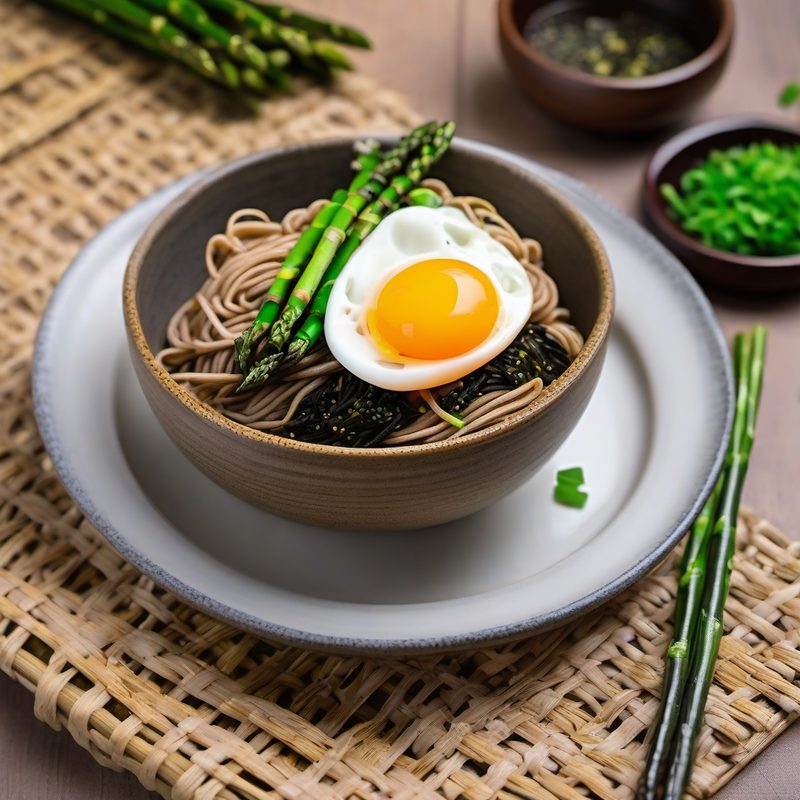
Soba Asparagus Egg Nori
| Amount | Ingredient |
|---|---|
| Calories | ~420 kcal |
| Protein | 18 g |
| Fat | 14 g |
| Carbohydrates | 55 g |
| Fiber | 6 g |
| Sodium | 1,320 mg |
| Sugar | 4 g |
Soba Noodles with Asparagus, Egg, and Nori
Category: Zuppe, Cucina giapponese
Servings: 4
Active Time: 25 minutes
Total Time: 40 minutes
Why This Recipe Works
A great soba bowl balances cooling, earthy buckwheat noodles with a deeply savory dipping sauce and contrasting textures. We wanted a dish that felt both refreshing and satisfying — perfect for a quick spring or summer meal. Cooking the soba just beyond al dente (but not mushy) and shocking them under cold running water firms the noodles and washes away excess starch that would cloud the sauce. Blanching the asparagus in the same water saves time and preserves its bright green color. Soft-boiled eggs — cooked to a jammy, molten yolk — enrich each bite, while toasted nori adds a briny crunch and seasame seeds contribute nutty pop. The dipping sauce, a simple combination of soy sauce, sesame oil, a touch of sugar, and water, is purposely light so the individual ingredients shine. Serving the sauce on the side (zaru-soba style) keeps the noodles from getting soggy and allows each person to dip as they like.
- Soba noodles (dried, 300 g / 10.5 oz): Look for 100 percent buckwheat soba (jūwari-soba) if you can find it; it has a deeper, earthier flavor. Standard dried soba with wheat flour works well too. Avoid fresh or frozen soba, which can be too delicate for this preparation.
- Asparagus (200 g / 7 oz, about 12 medium spears): Medium-thick spears (about ½ inch at the base) hold up best to blanching and stay tender-crisp. Trim or snap off the woody ends before cooking.
- Eggs (4 large): For perfectly jammy yolks with set whites, use cold eggs straight from the fridge and time the boil carefully (6½ minutes). Room-temperature eggs cook slightly faster; adjust to 6 minutes if needed.
- Nori (2 sheets): Toasted sushi-grade nori is ideal. Toasting the nori over a gas burner flame or in a dry skillet for a few seconds per side intensifies its flavor and crispness.
- Soy sauce: Use a good-quality Japanese soy sauce (usukuchi for a lighter color, or koikuchi for deeper flavor). Do not substitute with light soy sauce or tamari unless adjusting salt levels.
- Sesame oil: Toasted (dark) sesame oil is essential for its nutty, aromatic character. Do not use untoasted sesame oil.
- Sugar: A small amount of granulated white sugar balances the saltiness of the soy sauce and rounds out the dipping sauce.
- Sesame seeds: Toasted white sesame seeds provide visual contrast and a gentle crunch. Toast untoasted seeds in a dry skillet over medium heat for 1–2 minutes, shaking frequently.
- Green onions (scallions): Use the green and pale green parts only, thinly sliced on the bias for a delicate finish.
Equipment
- Large pot (6–8 quarts) for boiling noodles
- Colander or large sieve
- Large bowl of ice water (ice bath)
- Medium saucepan (for eggs and blanching asparagus)
- Slotted spoon
- Small skillet (for toasting nori and sesame seeds, if needed)
- Knife and cutting board
- Small mixing bowl (for dipping sauce)
- 4 serving bowls
Prep Work
- Prepare dipping sauce: In a small bowl, whisk together 6 tbsp soy sauce, 2 tbsp toasted sesame oil, 1½ tsp sugar, and ¼ cup cool water until the sugar dissolves completely. Set aside.
- Cut nori: Stack the 2 nori sheets and use scissors or a sharp knife to cut them into thin strips (roughly 5 cm long × 2 mm wide). Set aside.
- Prep asparagus: Trim woody ends from asparagus (bend each spear near the base — it will snap at the natural breaking point). Cut spears into 5 cm (2 in) pieces on the bias.
- Slice green onions: Thinly slice green onions on the bias; place in a small bowl of ice water for 5 minutes to crisp and curl, then drain and pat dry. This step is optional but adds a nice visual touch.
- Toast sesame seeds (if needed): Heat a small dry skillet over medium heat. Add sesame seeds and toast, shaking frequently, until fragrant and just beginning to brown, 1–2 minutes. Transfer to a small bowl to cool.
Timing Guide
| Step | When | Duration |
|---|---|---|
| Bring water to boil | Start | — |
| Cook and shock soba | After eggs come out | ~5–6 min |
| Soft-boil eggs | Start | 6½ min |
| Blanch asparagus | After soba | ~1½ min |
Steps
1. Soft-Boil the Eggs
Bring a medium saucepan of water to a rolling boil over high heat. Gently lower the 4 cold eggs into the water using a slotted spoon. Boil for exactly 6½ minutes (6 minutes if eggs are room temperature). Prepare a bowl of ice water. When the timer goes off, immediately transfer the eggs to the ice bath and let them cool for at least 3 minutes. Peel under cold running water and set aside.
2. Cook the Soba Noodles
Bring a large pot of generously salted water to a rolling boil (use about 1 tbsp salt per 4 quarts of water). Add the soba noodles, stirring immediately to prevent sticking. Cook according to the package directions — typically 4 to 5 minutes — until tender but still chewy. Do not overcook. Drain the noodles in a colander and immediately rinse under cold running water, rubbing gently with your hands to remove excess starch. Drain well and set aside.
3. Blanch the Asparagus
Bring a small pot of salted water to a boil. Add the asparagus pieces and cook until bright green and tender-crisp, about 1½ to 2 minutes. Drain and immediately transfer to the ice bath (the same one used for the eggs, refreshed with more ice if needed) to stop cooking. Drain and pat dry with paper towels.
4. Toast the Nori
Using tongs, pass each nori sheet briefly over a gas flame (or hold in a dry skillet over medium-high heat) for about 10–15 seconds per side until fragrant and slightly crisped. Cut into thin strips as directed above.
5. Assemble the Bowls
Divide the soba noodles evenly among 4 serving bowls. Arrange the asparagus pieces neatly on top. Halve each soft-boiled egg lengthwise and place 2 halves in each bowl. Sprinkle with shredded nori, toasted sesame seeds, and sliced green onions. Serve the dipping sauce on the side in small individual bowls — each diner dips their noodles and toppings into the sauce before eating.
Taste and Texture
The soba noodles are cool, firm, and slippery with a subtle buckwheat earthiness that anchors the bowl. The asparagus offers a bright, grassy snap that contrasts with the noodles' chew. The soft-boiled egg contributes rich, velvety, jammy yolk that coats the noodles when stirred in, plus tender, fully set whites. The nori strips provide crisp, briny, paper-thin texture that softens slightly on contact with the noodles. Sesame seeds add a tiny, nutty pop, while the green onions deliver a mild, fresh bite. The dipping sauce is salty-savory with toasted sesame depth and a whisper of sweetness — each component is dipped or drizzled to taste.
Serving Suggestions
- Temperature: Serve the noodles cold or at room temperature, the sauce at room temperature, the egg warm (freshly peeled), and the asparagus at room temperature. This contrast of cool noodles and warm egg is part of the appeal.
- Sake/Tea pairing: Serve with a chilled, dry sake (such as a Junmai or Honjozo) whose clean, rice-forward character complements the dipping sauce's saltiness without overwhelming the delicate noodles. Alternatively, a lightly roasted genmaicha (brown rice tea) or hōjicha (roasted green tea) — both nutty and low in bitterness — makes an excellent non-alcoholic pairing that echoes the sesame and buckwheat notes.
- Garnish: For an optional finishing touch, add a small dollop of wasabi (freshly grated if possible) to the side of each dipping sauce dish, or a pinch of shichimi tōgarashi (Japanese seven-spice) for gentle heat.
- Leftovers: Store the components separately — noodles (tossed with a few drops of sesame oil to prevent sticking), eggs (unpeeled, in the fridge), and sauce (covered). Assemble just before serving.
Troubleshooting
| Problem | Likely Cause | Solution |
|---|---|---|
| Noodles are mushy | Overcooked or not rinsed | Cook to the shorter end of the package time; rinse thoroughly with cold water and rub gently |
| Egg yolk is fully hard | Cooked too long | Use a timer and ice bath; 6½ minutes from cold, 6 minutes from room temp |
| Dipping sauce is too salty | Soy sauce-to-water ratio off | Add 1–2 tsp additional water or a squeeze of fresh lemon juice to balance |
| Asparagus is limp | Overcooked or not shocked | Blanch no longer than 2 minutes; shock immediately in ice water |
| Nori is chewy | Not toasted enough or old stock | Toast until fragrant and crisp; nori should crackle when broken |
Variations
- Add protein: Top with shredded cooked chicken, sliced grilled tofu (atsuage), or smoked salmon. Toss the protein in a teaspoon of soy sauce and sesame oil before adding.
- Spicy soba: Stir 1 tsp chili oil (rayu) or ½ tsp shichimi tōgarashi into the dipping sauce.
- Mushroom version: Replace asparagus with 200 g of sautéed shiitake or enoki mushrooms (sliced, cooked in 1 tbsp sesame oil until golden, then seasoned with 1 tbsp soy sauce).
- Cold dipping style (zaru-soba): Serve the noodles on a bamboo mat or flat basket (zaru) for a more traditional presentation; garnish and sauce on the side as written.
- Vegan option: Omit the soft-boiled egg and double the asparagus and nori. Add ½ avocado, sliced, per bowl for creaminess.
Storage and Reheating
- Refrigerator: Store cooked soba noodles in an airtight container for up to 2 days. Store the dipping sauce separately for up to 1 week. Store peeled, halved eggs in a sealed container with a damp paper towel for up to 1 day — sauce and nori separately for best texture.
- Freezer: Not recommended — thawed soba turns mushy and eggs become rubbery.
- Reheating: Dip cold noodles into room-temperature or slightly warmed sauce (do not boil the sauce). If the noodles clump, rinse briefly under hot water then shock in cold water before serving. Do not microwave — it ruins the texture.
Nutrition Information (Per Serving)
Note: Nutritional values are approximate and depend on specific brands and ingredient choices.
Recipe from The Italian Kitchen by Vita Milanese — Volume 1 · Pasta Perfetto. Discover all volumes on the ebook page.