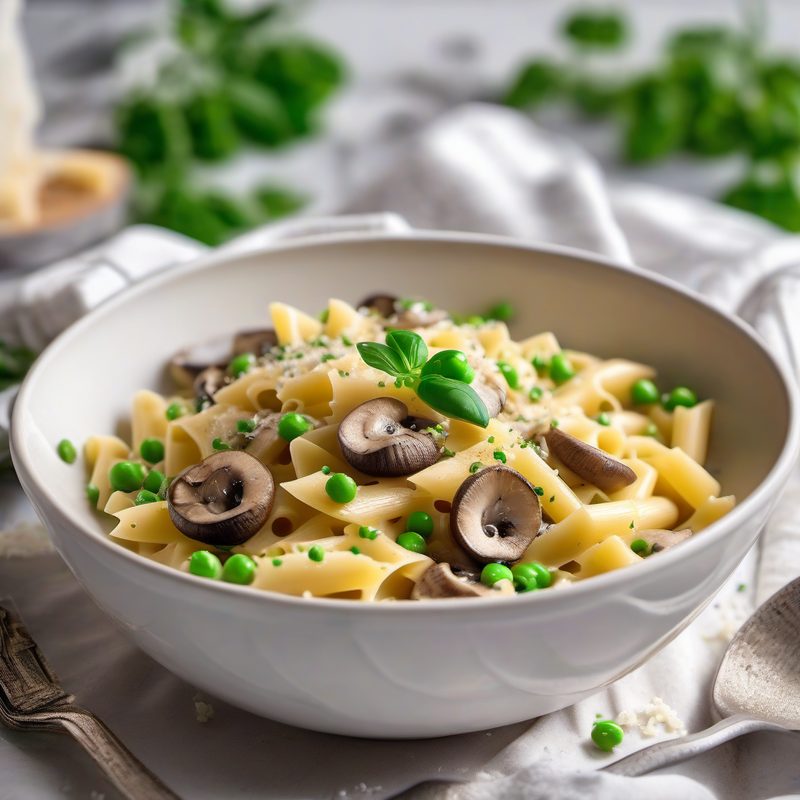
Pressure Cooker Mushroom Risotto
A deeply savory mushroom risotto with an earthy porcini backbone and a medley of fresh mushrooms — rendered silky and luscious in about half the time of the stovetop method, thanks to the pressure cooker's relentless, even heat.
| Amount | Ingredient |
|---|---|
| 3 oz (85 g) | Parmigiano-Reggiano, finely grated (about 1½ cups) |
| 2 tbsp (6 g) | Fresh parsley leaves and tender stems, minced |
The pressure cooker is the single best tool for weeknight risotto, and this mushroom version makes the most persuasive case yet. Traditional risotto demands 20 minutes of near-constant stirring — a meditative ritual in Italian kitchens but a non-starter on a busy Tuesday. The pressure cooker shortcut collapses that time dramatically while delivering rice that's every bit as creamy, every bit as tender, every bit as al dente. The secret is that high-pressure cooking forces starches to release from the rice grains under intense, uniform heat, creating that signature velvety emulsion without a fraction of the stirring. Here, dried porcini mushrooms build a deep, woodsy foundation while a mix of fresh mushrooms — cremini, shiitake, oyster — contribute textural variety and concentrated, browned flavor. The result is a risotto that tastes as though you spent an hour at the stove, when in reality the pressure cooker handled the heavy lifting in five minutes flat.
> Note: This recipe calls for a stovetop pressure cooker (6-quart/6-liter or larger). Electric pressure cookers like the Instant Pot work too — use the sauté function for browning and the pressure-cook setting at high pressure, then quick-release as directed.
For the Mushroom Stock Base
For the Mushroom Sauté
For the Risotto
For Finishing
Use level tablespoons and standard US measuring cups. All produce is medium unless specified.
🥘 Equipment
- Stovetop pressure cooker (6-qt / 6-liter or larger)
- Microwave-safe liquid measuring cup or bowl (at least 2-cup capacity)
- Slotted spoon
- Chef's knife and cutting board
- Wooden spoon or heatproof silicone spatula
- Box grater or Microplane (for Parmigiano-Reggiano)
- Serving bowls, warmed
📋 Preparation
Step 1 — Bloom the Porcini (10 minutes)
Place the chicken stock and dried porcini mushrooms in a microwave-safe container and microwave on high power until simmering, about 5 minutes. Remove from the microwave and let steep for 5 minutes.
Using a slotted spoon, transfer the rehydrated porcini mushrooms to a cutting board and finely chop them. Set aside.
Return the porcini-infused stock to the microwave and keep warm on the lowest power setting (or transfer to a small saucepan and keep at a bare simmer on the stove).
Blooming dried porcini in hot stock infuses the liquid with concentrated umami that penetrates every grain of rice. Don't use water — using stock here builds flavor from the very first step. If the microwave isn't your style, bring the stock to a simmer in a saucepan, add the porcini, cover, remove from heat, and steep for 10 minutes.
Step 2 — Brown the Mushrooms (8 minutes)
Heat the olive oil and 1 tablespoon (14 g) of the butter in the pressure cooker over medium-high heat until the butter stops foaming and the oil shimmers.
Add the fresh sliced mushrooms in a single, even layer. Cook, stirring occasionally, until the liquid the mushrooms release has fully evaporated and the mushrooms are well browned with crisp edges — about 8 minutes. Season generously with salt and pepper.
Proper browning is the single most important step in this dish. Mushrooms contain mostly water; they'll steam and release liquid before they brown. Don't stir too often — let them sit and develop color. If your pressure cooker is crowded (mushrooms piled higher than ½ inch), brown them in two batches for better browning. Pale, steamed mushrooms lead to a bland risotto.
Add the chopped porcini, shallot, and garlic. Cook, stirring frequently, until the shallot is softened and translucent — about 2 minutes.
Step 3 — Toast the Rice (2 minutes)
Add the rice and cook, stirring constantly, until the grains become translucent around the edges — about 1 minute. The rice should look slightly chalky and feel hot to the touch.
Toasting the rice in the fat-coated pan serves two purposes: it wraps each grain in flavor from the mushroom-butter mixture, and it firms the outer starch layer so the rice maintains its structure during pressure cooking rather than turning to mush.
Add the white wine and cook, stirring, until the wine is fully evaporated — about 1 minute. The sizzling sound should quiet as the alcohol cooks off.
Step 4 — Pressure Cook (5–6 minutes)
Pour the warm porcini stock over the rice. Stir once to combine — the liquid should just cover the rice.
Close the pressure cooker according to the manufacturer's instructions and bring to high pressure over high heat. When the cooker reaches high pressure (usually indicated by a hissing regulator or a pop-up indicator), reduce the heat to medium-low to maintain steady pressure.
Cook at high pressure for:
- 5 minutes for carnaroli rice
- 6 minutes for arborio rice
Carnaroli is the preferred risotto rice for pressure cooking — its higher amylose starch content keeps grains firmer and more separate under the intense heat of pressure, while arborio's lower amylose content breaks down faster and requires the extra minute to reach the same tenderness. If you can only find arborio, the extra minute is critical; don't shortchange it.
Step 5 — Quick-Release and Finish (3 minutes)
Quick-release the pressure according to the manufacturer's instructions (usually by moving the regulator to the venting position or pressing the release button). Stand back — the steam is extremely hot.
Open the pressure cooker and stir the risotto gently. It should be thick and creamy, with rice grains that are tender but still retain a slight bite at the center (al dente). If the risotto seems too thick or stiff, stir in hot water or extra stock in ¼-cup (60 ml) increments until it reaches a loose, spoonable consistency.
The risotto will look looser than you expect when you first open the cooker — it will continue to thicken as it sits and cools. Aim for "a little soupier than ideal" at this stage; the butter and cheese you're about to add will tighten it beautifully.
Add the remaining 2 tablespoons (28 g) butter, the grated Parmigiano-Reggiano, and the minced parsley. Stir vigorously with a wooden spoon or silicone spatula for about 30 seconds — this final agitation (the mantecatura in Italian) emulsifies the fat and starch into a velvety, cloud-like cream.
Taste and adjust seasoning with salt and pepper. Serve immediately in warmed bowls.
Mantecatura is the Italian technique of vigorously beating butter and cheese into the risotto at the end to create a glossy, emulsified texture. Don't be gentle — a vigorous, folding-and-stirring motion is what transforms separate ingredients into a unified creamy whole.
🧑🍳 Chef's Tips
- Rice choice matters: Carnaroli is the gold standard for pressure-cooker risotto because its plump, high-starch grains hold up better under pressure than arborio. Vialone Nano is another excellent option if you can find it. Long-grain rice will not work — it lacks the starch to create the creamy emulsion.
- Fresh mushrooms, mixed: A combination of cremini (brown button mushrooms), shiitake (meaty and savory), and oyster (delicate, almost lacy texture) gives the best depth. If you can only find one type, use cremini — they're the most versatile and flavorful workhorse mushroom.
- Dried porcini are non-negotiable: Even if you're using the freshest wild mushrooms available, the dried porcini add a concentrated earthy, almost smoky depth that fresh mushrooms alone cannot replicate. Store dried porcini in an airtight jar in a cool, dark pantry — they keep for months.
- Warm the stock: Adding cold stock to the hot pressure cooker shocks the temperature and extends the time it takes to reach pressure. Always warm the stock before adding it.
- Don't skip the mantecatura: The final vigorous stirring with butter and cheese is what gives restaurant-quality risotto its signature creamy sheen. This is not an optional step — it's the entire point.
- Serve immediately: Risotto waits for no one. As it cools, the starches continue to absorb liquid and the texture stiffens. Have your bowls warmed and your guests seated before you open the pressure cooker.
- Quick-release is essential: Do not let the pressure release naturally — the residual heat will continue cooking the rice beyond al dente into mush. Always use the quick-release method.
❌ Common Mistakes
| Mistake | Why | Fix |
|---|---|---|
| Crowding the mushrooms | Mushrooms steam instead of browning, producing pale, flavorless results | Cook in a single layer; brown in two batches if your pressure cooker isn't wide enough |
| Using the wrong rice | Regular long-grain rice lacks the starch for creamy risotto | Always use carnaroli, arborio, or vialone nano — these are the only risotto rices |
| Forgetting to bloom the porcini | Dried mushrooms added dry won't rehydrate fully during the short pressure cook, leaving them leathery | Always steep in hot liquid for at least 5 minutes before adding |
| Natural pressure release | The residual heat continues cooking the rice to a mushy texture | Always quick-release the pressure as soon as the cooking time is up |
| Over-toasting the rice | Toasting too long (beyond translucent edges) makes the grains too firm and they won't absorb liquid properly | Toast only until the edges become translucent — about 1 minute, no more |
| Under-salting at the mushroom stage | Mushrooms need salt to release their liquid and develop flavor | Season the mushrooms generously while browning, not just at the end |
| Skipping the mantecatura | The risotto turns out loose and separated instead of creamy and emulsified | Beat in the butter and cheese vigorously at the end — this is not a gentle fold |
| Serving on cold plates | Risotto seizes up instantly on a cold surface | Warm serving bowls in a low oven (200°F) or with hot water (dry thoroughly) before plating |
🔄 Variations
| Variation | How To |
|---|---|
| Mushroom & Truffle Risotto | Drizzle with white truffle oil just before serving, or shave fresh black truffle over each bowl |
| Mushroom & Pea Risotto | Fold in ½ cup (75 g) frozen peas (thawed) with the butter and cheese at the end — the sweet pop of green balances the earthy mushrooms beautifully |
| Mushroom & Rosemary Risotto | Add 1 teaspoon finely chopped fresh rosemary with the shallot and garlic in Step 2 |
| Mushroom & Gorgonzola Risotto | Replace half the Parmigiano-Reggiano with crumbled Gorgonzola dolce for a pungent, creamy twist |
| Mushroom & Saffron Risotto | Crush a generous pinch of saffron threads into the warm stock before pressure cooking |
| Vegan Mushroom Risotto | Replace butter with 3 tablespoons (45 ml) extra-virgin olive oil (divided 1 tbsp for browning, 2 tbsp for mantecatura) and omit the Parmigiano-Reggiano; finish with 2 tablespoons nutritional yeast for umami and a squeeze of lemon for brightness |
| Porcini & Pancetta Risotto | Add 3 oz (85 g) finely diced pancetta with the fresh mushrooms in Step 2 and cook until crisp before proceeding |
🥶 Storage & Leftovers
| Method | Details |
|---|---|
| Refrigerator | Store in an airtight container for up to 2 days. Risotto will firm up significantly as it cools. |
| Freezer | Not recommended — the creamy emulsion breaks upon thawing and the rice texture becomes mushy and unappealing. |
| Reheating | The best way to revive leftover risotto: form it into patties (about ½ inch thick) and pan-fry in olive oil until golden and crispy on both sides — arancini-style. Alternatively, reheat in a skillet over medium-low heat with a splash of stock or water, stirring constantly, until hot. Do not microwave — it ruins the texture. |
🍷 Wine Pairing
| Wine | Why |
|---|---|
| Nebbiolo (Langhe) | The earthy, truffle-like notes of Nebbiolo mirror the porcini and browned mushrooms flawlessly; its firm tannins cut through the creamy richness |
| Barbera d'Alba | Bright acidity and dark fruit flavors hold their own against the concentrated mushroom umami |
| Pinot Nero (Alto Adige) | Light-bodied but structured, with earthy, red-berry notes that complement without overpowering |
| Chardonnay (oaked, from Friuli) | The buttery, vanilla notes of an oaked Chardonnay echo the risotto's creamy texture |
| Gavi di Gavi | A crisp, mineral-driven white that cuts through the richness like a palate reset between bites |
| Franciacorta Brut | The bubbles and acidity of this méthode traditionnelle sparkling wine are a classic Italian pairing for mushroom-based dishes |
🥗 Suggested Side Dishes
- Simple arugula salad with lemon vinaigrette and shaved Parmigiano-Reggiano — the peppery greens cut the richness
- Sautéed broccolini or rapini (cime di rapa) with garlic and chili flakes
- Roasted asparagus with olive oil and flaky sea salt
- Crusty sourdough or ciabatta for sopping up every last drop of creamy risotto
- Grilled radicchio wedges with balsamic glaze — the bitterness balances the earthy mushrooms
- Shaved fennel and orange salad with black olives and a citrus vinaigrette
🔗 Related Recipes
- Risotto alla Milanese — Saffron Risotto
- Risotto ai Funghi Porcini — Classic Porcini Mushroom Risotto (Stovetop)
- Risotto al Barolo — Barolo Wine Risotto with Parmigiano-Reggiano
- Risotto alla Zucca — Creamy Butternut Squash Risotto with Sage
- Risotto ai Gamberi — Shrimp Risotto with Saffron
- Orzotto ai Funghi — Mushroom and Barley Risotto (Pearl Barley)
- Polenta ai Funghi — Creamy Polenta with Wild Mushroom Ragù
- Fregola ai Frutti di Mare — Toasted Sardinian Pasta with Seafood
🏷️ Search Tags
Photo: vol1_155.png — A creamy, golden-brown mushroom risotto mounded in a shallow white bowl, speckled with browned sliced cremini and shiitake mushrooms, a scattering of fresh parsley, and a glossy sheen of melted Parmigiano-Reggiano, served with a wooden spoon resting on the rim in warm natural light.
Recipe from "The Italian Kitchen" by Vita Milanese — Volume 1: Pasta Perfetto
Recipe from The Italian Kitchen by Vita Milanese — Volume 1 · Pasta Perfetto. Discover all volumes on the ebook page.