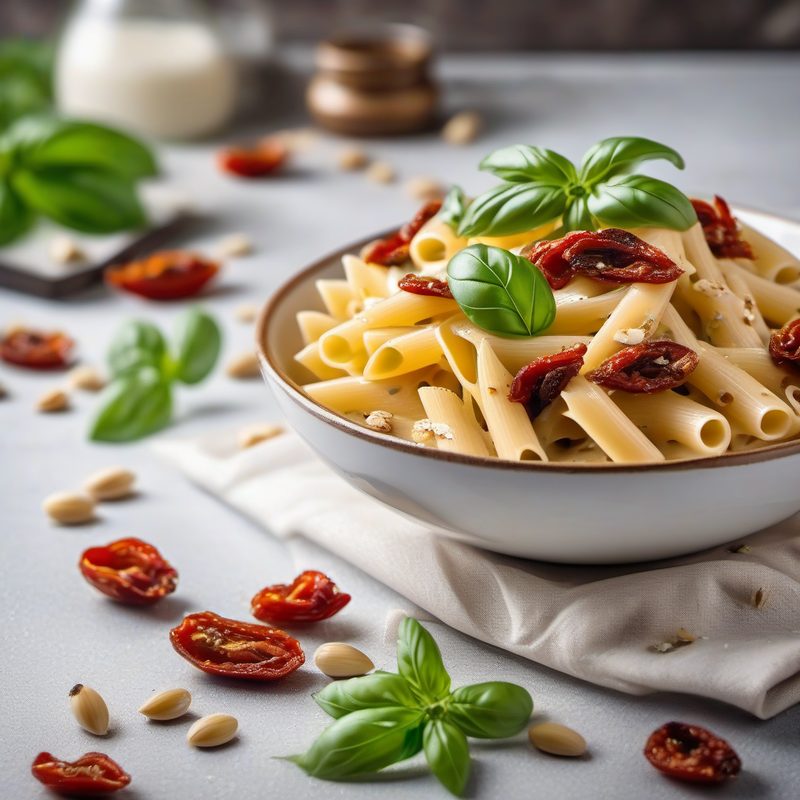
Paccheri Artichokes Clams Bottarga
A symphony of land and sea — tender artichokes and briny clams meet in a silky white wine sauce, crowned with the umami punch of freshly grated bottarga. This is Campania on a plate.
| Amount | Ingredient |
|---|---|
| 12 oz (340 g) | Paccheri (or large tubular pasta like ziti, rigatoni, or calamarata) |
| 4 | Large artichokes |
| 1 lb | Littleneck or Manila clams, scrubbed |
| 1 oz (30 g) | Bottarga (mullet or tuna roe) |
| 2 cloves | Garlic, peeled and thinly sliced |
| 1/2 cup (120 ml) | Dry white wine |
| 3 tbsp | Extra-virgin olive oil, divided |
| 1/4 cup | Fresh parsley, finely chopped |
| to taste | Salt |
| to taste | Freshly ground black pepper |
There's a reason this dish appears on the best menus from Naples to the Amalfi Coast: it's a masterclass in contrasting textures and complementary flavors. The meaty, tube-shaped paccheri catch every bit of the sauce, while the artichokes bring a subtle, earthy sweetness that balances the clam's briny pop. The crowning touch — a fine dusting of bottarga, or cured mullet roe — adds a nutty, savory complexity that ties everything together. It looks impressive enough for company but comes together in about 45 minutes with a little smart timing. The key is prepping the artichokes and purging the clams before you start cooking.
> Note: The active cooking time is about 20 minutes. Most of the prep work is cleaning the artichokes and purging the clams.
🥘 Equipment
- Large bowl (for acidulated water)
- Vegetable peeler or paring knife
- Large skillet or sauté pan (12-inch)
- Dutch oven or second large pot with lid (for steaming clams)
- Fine-mesh strainer or cheesecloth
- Large pot (6-qt) for pasta
- Colander
- Microplane or fine grater (for bottarga)
- Ladle
- Tongs
📋 Preparation
Step 1: Prep the Artichokes
Fill a large bowl with cold water and squeeze in the juice of 1/2 lemon (or add 1 tbsp white vinegar) to create acidulated water — this prevents the artichokes from browning.
Working with one artichoke at a time, pull off the tough outer leaves until you reach the pale, tender inner leaves. Cut off the top 1 inch of the leaves and trim the stem to about 1 inch, then peel the fibrous outer layer of the stem with a vegetable peeler. Cut the artichoke in half lengthwise and scoop out the fuzzy choke with a spoon. Slice each half crosswise into thin (1/4-inch) slices. Drop the slices into the acidulated water immediately.
Why acidulated water? Artichokes oxidize and turn brown within minutes of being cut. The acid in the lemon water stops that reaction cold, keeping them pale and pretty.
Step 2: Purge the Clams
While the artichokes soak, place the scrubbed clams in a bowl of cold salted water (1 tbsp salt per 4 cups water). Let them sit for 30 minutes to expel any sand or grit. Drain, rinse, and set aside. Discard any clams with cracked shells or that are open and won't close when tapped.
Step 3: Sauté the Artichokes
Drain the artichoke slices and pat very dry with a clean kitchen towel (water makes oil splatter).
In a large skillet, heat 2 tbsp olive oil over medium heat. Add the sliced garlic and cook until fragrant but not colored — about 30 seconds. Add the artichoke slices and spread them in an even layer. Cook, stirring occasionally, until they are tender and beginning to brown at the edges — about 5 minutes. Season with a pinch of salt and pepper.
Pour in 1/4 cup (60 ml) of the white wine, scraping up any browned bits from the bottom of the pan. Cook until the wine has mostly evaporated, about 2 minutes. Reduce heat to low, cover, and cook until the artichokes are completely tender — about 3 minutes more. Transfer to a plate and set aside.
Step 4: Steam the Clams
In the same pan (or a Dutch oven), heat the remaining 1 tbsp olive oil over high heat. Add the purged clams and the remaining 1/4 cup (60 ml) white wine. Cover immediately and cook, shaking the pan occasionally, until the clams have opened wide — about 4–6 minutes.
Using tongs, transfer the opened clams to a bowl. Discard any that remain closed. When cool enough to handle, remove most of the clams from their shells, reserving a few in the shell for garnish. Strain the cooking liquid through a fine-mesh strainer or cheesecloth into a small bowl to remove any grit. Reserve this liquid — it's liquid gold.
Step 5: Cook the Pasta
Meanwhile, bring a large pot of generously salted water (about 1 tbsp salt per 4 quarts) to a rolling boil. Add the paccheri and cook until firmly al dente — about 1 minute less than the package directs. Reserve 1 cup of pasta water before draining.
Step 6: Bring It All Together
Return the large skillet to medium heat. Add the sautéed artichokes and the strained clam cooking liquid. Using tongs or a spider, transfer the drained paccheri directly into the skillet — a little clinging water is fine.
Add about 1/4 cup of reserved pasta water and toss vigorously for 1–2 minutes, letting the starches emulsify with the clam juice and olive oil into a silky, clingy sauce. If the pasta looks dry, add more pasta water a splash at a time.
Add the shucked clams and half the parsley. Toss gently just to warm the clams through — about 30 seconds. Taste and adjust salt (the clam liquid is naturally briny, so go easy).
Step 7: Serve with Bottarga
Divide among warm shallow bowls. Using a Microplane or fine grater, grate a generous layer of bottarga over each portion — about 1/4 of the total per bowl. Sprinkle with the remaining parsley and a few whole clams in their shells for presentation. Serve immediately.
Why grated at the end? Bottarga's magic is in its texture and aroma. Grating it fresh over the hot pasta releases its volatile oils right at the table, giving you that unmistakable savory-sweet briny hit in every bite.
🧑🍳 Chef's Tips
- Bottarga is non-negotiable: There is no real substitute for the savory, nutty complexity of cured fish roe. Look for mullet bottarga (bottarga di muggine) — it's milder and more delicate than tuna bottarga. It's available at Italian specialty shops, well-stocked supermarkets, or online. A single ounce will last for several pasta dishes if stored wrapped in parchment in the refrigerator.
- Clam choice matters: Littleneck or Manila clams are ideal — they're small, sweet, and tender. Cherrystone clams work too but are chewier. Avoid chowder clams (quahogs), which are too tough for this quick preparation.
- Paccheri are worth seeking out: These big, ridged tubes are designed to catch and hold chunky sauces. If you can't find them, use ziti, rigatoni, or calamarata. Do not use spaghetti or angel hair — the sauce needs a substantial pasta to work.
- Don't skip the clam purging: Even pre-washed clams can hold sand. The salted water bath is a non-negotiable 30-minute step. Skipping it means gritty artichokes AND gritty clams.
- Reserve extra pasta water: The starchy water is what thickens the sauce into something that coats every ridge of the paccheri. Keep that full cup handy, even if you don't use it all.
- Bottarga keeps well: Wrapped in plastic and stored in the fridge, bottarga lasts for months. Grate it only when ready to serve — pre-grated bottarga loses its aromatic punch quickly.
❌ Common Mistakes
| Mistake | Why | Fix |
|---|---|---|
| Overcooking the artichokes | They turn mushy and lose their delicate sweetness | Sauté until just tender with some bite — about 8 minutes total |
| Undercooking the paccheri | The large tubes need time to become tender but still hold their shape | Cook to firm al dente — about 1 minute less than package directions |
| Forgetting to strain the clam liquid | Sand and grit from the shells end up in your sauce | Always strain through a fine-mesh strainer or cheesecloth |
| Grating bottarga too early | It loses its aromatic punch and the heat of the pasta won't bloom its oils | Grate fresh over each serving at the table, not into the pan |
| Rinsing the pasta | Washes away the starch needed to build the emulsion | Drain, don't rinse; let the pasta water do its job |
| Using bottled lemon juice | Harsh, metallic flavor that overwhelms the delicate clam and artichoke notes | Use fresh lemon for the acidulated water — the artichokes absorb it |
💡 Variations
- Spicy kick: Add 1 dried peperoncino or 1/2 tsp red pepper flakes to the garlic at the start for gentle heat that complements both the clams and the bottarga.
- Breadcrumb crunch: Toast 1/3 cup fresh breadcrumbs in olive oil until golden and sprinkle over the finished dish, between the bottarga and the parsley, for textural contrast.
- Tomato version: Add 1 cup halved cherry tomatoes with the artichokes — their acidity brightens the dish and turns the sauce a gorgeous pale coral.
- Zucchini swap: Replace artichokes with 2 medium zucchini, halved lengthwise and sliced into half-moons. Sauté the same way — the zucchini's delicate flavor lets the clams and bottarga take center stage.
- Lighter option: Reduce olive oil to 2 tbsp total and use only the strained clam liquid for the sauce. Skip the bottarga and finish with extra parsley and a squeeze of lemon instead.
- Mussel variation: Substitute 2 lbs mussels for the clams — follow the same steaming method but reduce cooking time to 3–4 minutes (mussels cook faster).
- Gluten-free: Use a high-quality gluten-free paccheri or large tube pasta (brown rice and corn blend works best). Handle with care — gluten-free pasta is more fragile.
❄️ Storage
| Storage Method | Duration | Instructions |
|---|---|---|
| Refrigerator | Up to 2 days | Store in an airtight container. The bottarga should be stored separately and added fresh on reheating |
| Freezer | Not recommended | The clams turn rubbery and the artichokes become waterlogged on thawing |
| Reheating | Gently | Reheat in a skillet over medium-low with a splash of white wine or water. Do not microwave — it will turn the paccheri mushy. Add fresh bottarga after reheating |
🍷 Wine Pairing
| Wine | Why |
|---|---|
| Falanghina del Sannio | From Campania, with bright citrus, white flowers, and a saline finish that mirrors the clam liquor |
| Greco di Tufo | Full-bodied, mineral-driven, with enough structure to stand up to the bottarga's intensity |
| Vermentino di Sardegna | Sardinia's signature white — bright acidity and a faint almond note that pairs beautifully with the artichokes |
| Soave Classico | Elegant, with notes of white peach and almond — a gentle partner that won't overpower the delicate clam flavor |
| Gavi di Gavi | Crisp, floral, and mineral — a classic Piedmontese seafood wine with the acidity to cut through the olive oil |
🍺 Beer Pairing
| Beer | Why |
|---|---|
| Italian Dry Pilsner | High carbonation and clean bitterness cut through the olive oil and refresh the palate between bites |
| Belgian Witbier | Soft citrus and spice notes complement the artichokes without competing with the bottarga |
| West Coast Pilsner | A hybrid of crisp lager and floral hops — the bitterness stands up to the bottarga's intensity |
🥗 Suggested Sides
- Grilled asparagus with lemon and olive oil — a natural companion to the artichokes
- Shaved fennel and orange salad with sea salt and a drizzle of olive oil
- Crusty ciabatta or sourdough — essential for sopping up every drop of the clam-and-artichoke sauce
- Light arugula salad with shaved Parmigiano-Reggiano and a lemon vinaigrette
- Roasted cherry tomatoes with oregano — for a pop of color and acidity alongside
📊 Nutrition (per serving)
| Calories | Protein | Fat | Carbs | Fiber |
|---|---|---|---|---|
| 490 | 22 g | 16 g | 65 g | 5 g |
Note: Nutrition varies based on artichoke size, olive oil quantity, and bottarga amount.
❓ FAQ
Can I use frozen artichokes instead of fresh?
Frozen artichoke hearts are an acceptable shortcut — just thaw, pat dry, and skip the acidulated water step. Note that frozen artichokes are usually just the hearts (no stems or inner leaves), so you'll lose some textural complexity. Cook them the same way.
What exactly is bottarga, and where do I find it?
Bottarga is salted, pressed, and dried fish roe — most commonly from gray mullet (bottarga di muggine) or tuna (bottarga di tonno). It has a firm, waxy texture and a flavor that's been described as \"sea urchin meets Parmesan.\" Look for it in Italian specialty stores, Eataly, Whole Foods (cheese counter sometimes carries it), or online from Gustiamo or Amazon.
What if I can't find paccheri?
Any large, ridged, tubular pasta works. Ziti, rigatoni, or mezze maniche are excellent substitutes. The tube shape is essential — it traps the artichoke bits and clam pieces inside. Do not use thin pasta like spaghetti or linguine; the sauce won't cling properly.
My clams didn't open after 6 minutes — what now?
Give them another 2 minutes. If they still haven't opened, discard them — closed clams were dead before cooking and are unsafe to eat. Always sort clams before cooking: tap any open ones on the counter; if they don't close, discard them.
Can I use jarred bottarga?
Jarred or pre-grated bottarga is available but significantly less aromatic than a whole piece grated fresh. If that's all you can find, use 1.5 times the amount and add it at the very last minute. For the best result, invest in a whole piece — it keeps for months in the fridge.
Is this dish gluten-free adaptable?
Yes — use a gluten-free large tube pasta (brown rice and corn blend is best). The rest of the ingredients are naturally gluten-free. Make sure your bottarga is labeled gluten-free (pure bottarga usually is, but some pre-grated versions may contain additives).
Can I prepare the artichokes the night before?
Yes — prepare them through Step 1, then store the slices in the acidulated water in the refrigerator overnight. Drain and pat dry before cooking. The lemon water will keep them from browning.
🔗 Related Recipes
- Linguine alle Vongole — Classic White Wine Clam Pasta
- Spaghetti con le Arselle — Clam Spaghetti with Garlic & Parsley
- Spaghetti with Fresh Oysters & Chili
- Paccheri alla Nerano — Zucchini & Provolone Pasta
- Paccheri with Fried Eggplant Cream & Ricotta Salata
- Spaghetti with Anchovy, Chili & Breadcrumbs
- Bucatini with Sardines, Fennel & Pine Nuts
🏷️ Search Tags
Photo: vol1_148.png
Recipe from "The Italian Kitchen" by Vita Milanese — Volume 1: Pasta Perfetto
Recipe from The Italian Kitchen by Vita Milanese — Volume 1 · Pasta Perfetto. Discover all volumes on the ebook page.