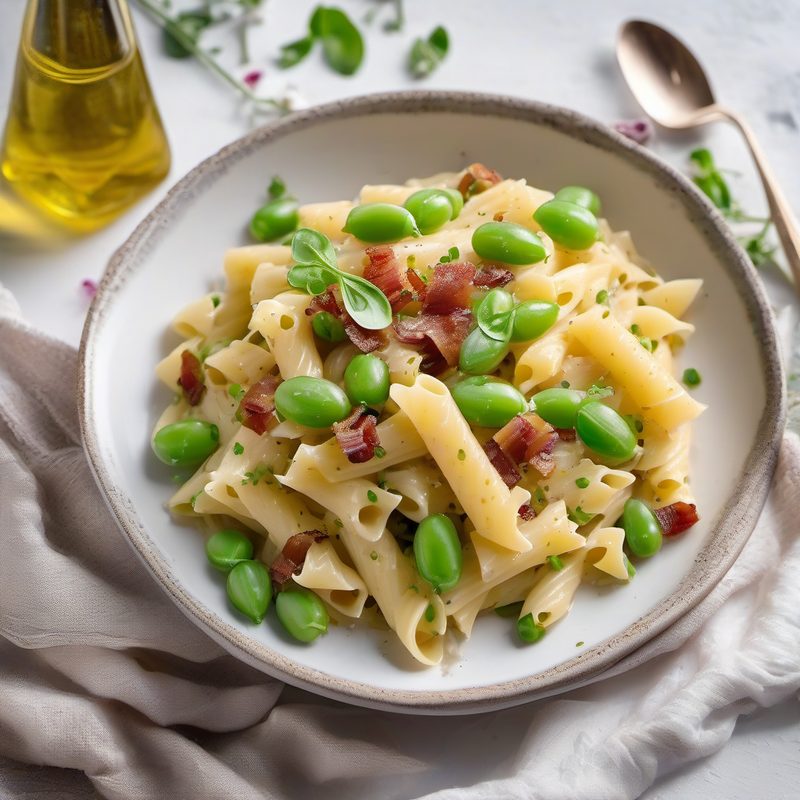
Paccheri Pepper Ricotta
Smoky, velvety, and vibrant — roasted red peppers blended with creamy ricotta create a silky sauce that clings to every ridged tube of paccheri.
| Amount | Ingredient |
|---|---|
| 6 | Red bell peppers (preferably long "corno" or standard bell) |
| 12 oz | Paccheri (or large tube pasta — ziti, rigatoni, or penne) |
| 1 cup | Whole-milk ricotta (store-bought or fresh) |
| 1 cup | Cherry tomatoes, halved |
| 1 | Small red onion, finely chopped |
| 2 | Garlic cloves, thinly sliced |
| ¼ cup | Extra-virgin olive oil, plus more for drizzling |
| ½ cup | Fresh basil leaves, roughly chopped (plus whole leaves for garnish) |
| to taste | Salt |
| to taste | Black pepper, freshly ground |
> Note: Roasting and peeling the peppers is the most time-consuming step — the sauce itself comes together in minutes.
🥘 Equipment
- Baking sheet
- Parchment paper or aluminum foil
- Large pot (6-qt)
- Colander
- Food processor or blender
- Large skillet or sauté pan (12-inch)
- Paper bag or bowl with plastic wrap (for steaming peppers)
📋 Preparation
Step 1: Roast the Peppers
Preheat the oven to 425°F (220°C) with a rack in the upper third. Place the whole peppers on a parchment-lined baking sheet. Roast, turning once halfway through, until the skins are deeply blistered and charred all over — 25 to 30 minutes.
Why whole? Roasting peppers whole traps steam inside, which separates the skin from the flesh, making peeling effortless.
Transfer the hot peppers to a paper bag, fold the top closed, and let them steam for 10 minutes. (No paper bag? Place them in a bowl and cover tightly with plastic wrap.)
Step 2: Clean the Peppers
Once the peppers are cool enough to handle, peel off the charred skins with your fingers — they should slip right off. Cut each pepper open, discard the stems, seeds, and membranes. Do not rinse them; you'll lose the smoky flavor.
Step 3: Make the Cream
Transfer the peeled peppers to a food processor or blender. Add the ricotta, 2 tablespoons of olive oil, ¼ cup of basil, ¾ teaspoon salt, and ¼ teaspoon black pepper. Process until completely smooth and velvety — about 30 to 45 seconds, scraping down the sides once.
Taste and adjust salt as needed. Set aside.
Step 4: Cook the Tomatoes
Heat the remaining 2 tablespoons of olive oil in a large skillet over medium heat. Add the chopped red onion and cook, stirring occasionally, until softened and translucent — about 4 minutes. Add the sliced garlic and cook until fragrant — about 30 seconds.
Add the halved cherry tomatoes, cut side down. Cook without stirring for 2 minutes to get some browning, then toss and cook for another 2 minutes, until the tomatoes soften and release their juices.
Reduce heat to low while you cook the pasta.
Step 5: Cook the Pasta
Bring a large pot of generously salted water (about 1½ tablespoons salt per 4 quarts water) to a rolling boil. Add the paccheri and cook according to package directions until firmly al dente — about 1 minute less than suggested.
Pro tip: Paccheri's large ridges and wide tubes are designed to catch creamy sauces. Undercook slightly so the pasta finishes cooking in the pan.
Step 6: Finish & Serve
Reserve ½ cup of pasta cooking water before draining. Drain the paccheri and add it directly to the skillet with the tomatoes over low heat.
Add the pepper-ricotta cream and ½ cup of reserved pasta water. Toss vigorously for 1 minute, letting the sauce coat every tube. The pasta water helps the cream loosen and adhere to the pasta.
If the sauce feels too thick, add more pasta water 1 tablespoon at a time. Taste and adjust salt and pepper.
Remove from heat. Fold in the remaining ¼ cup of fresh basil.
Divide among warm bowls. Garnish with whole basil leaves, a drizzle of extra-virgin olive oil, and a crack of black pepper.
🧑🍳 Chef's Tips
- Don't skip the steam step: Sealing the hot peppers in a bag or bowl creates steam that loosens the skin. Trying to peel hot peppers without steaming is frustrating and leaves bits of char behind.
- Room-temperature ricotta: Let the ricotta sit out for 15 minutes before blending. Cold ricotta doesn't emulsify as smoothly into the sauce.
- Reserve plenty of pasta water: The starchy water is the secret to a silky, cohesive sauce. The ricotta cream can be thick — pasta water thins it to a luscious consistency.
- Paccheri matters: These large, ridged tubes are designed for chunky or creamy sauces. The sauce gets inside the tube and clings to the ridges. If you substitute, choose a pasta with ridges or texture — rigate styles work best.
- Char is flavor: Don't be shy — you want the pepper skins properly blackened. Under-roasted peppers taste raw, not smoky.
❌ Common Mistakes
| Mistake | Why | Fix |
|---|---|---|
| Rinsing the peeled peppers | Water washes away the smoky, roasted flavor | Peel with your hands; let any stray bits come off naturally |
| Using low-fat ricotta | Watery, grainy sauce that breaks | Whole-milk ricotta only — the fat ensures a velvety emulsion |
| Overcooking the pasta | Collapsed tubes that don't hold sauce | Cook to firm al dente — 1 minute less than package directions |
| Adding cream too early | Sauce reduces and breaks; pasta overcooks | Add the cream off the heat or on very low heat, toss quickly |
| Skipping pasta water | Sauce is too thick to coat the pasta evenly | Always reserve at least ½ cup — it's the glue that binds |
💡 Variations
- Add protein: Top with grilled chicken, seared shrimp, or crispy pancetta. The smoky-sweet pepper cream pairs beautifully with pork and shellfish.
- Make it vegetarian: Already vegetarian. For a heartier version, add 1 can (15 oz) of drained chickpeas with the tomatoes.
- Add spice: Toss ½ teaspoon red pepper flakes with the garlic and onion for a gentle heat.
- Herb swap: Replace basil with fresh oregano or marjoram for a more rustic, southern Italian flavor.
- Nutty depth: Add 2 tablespoons toasted pine nuts or chopped walnuts to the cream before blending.
- Make it vegan: Substitute the ricotta with 1 cup raw cashews soaked overnight + 2 tablespoons nutritional yeast + ¼ cup water, blended until smooth.
- Grilled version: Grill the peppers on an outdoor grill or gas stove flame for even more smoky flavor.
❄️ Storage
Leftover pasta can be refrigerated in an airtight container for up to 2 days. To reheat, warm gently in a skillet over low heat with a splash of water or milk to loosen the sauce. Microwave is not recommended — the ricotta can separate under high heat.
The pepper-ricotta cream can be made up to 3 days ahead and refrigerated separately. Bring to room temperature before tossing with hot pasta.
🍷 Wine Pairing
| Wine | Why |
|---|---|
| Vermentino di Sardegna | Bright acidity and herbal notes cut through the creamy ricotta |
| Grillo (Sicily) | Rounded citrus with a hint of almond — mirrors the sweetness of roasted peppers |
| Rosé di Montepulciano | Dry, structured rosé with enough body to stand up to the smoky peppers |
| Chianti Classico | Sangiovese's cherry notes and firm acidity complement the sweet-savory pepper cream |
🍺 Beer Pairing
| Beer | Why |
|---|---|
| Italian Pilsner | Crisp, clean bitterness cuts through the richness of ricotta |
| Belgian Saison | Peppery, fruity esters echo the sweetness of roasted red peppers |
| New England IPA | Juicy, low-bitterness hops match the creamy, sweet-savory profile |
🥗 Suggested Sides
- Arugula & lemon salad with shaved Parmigiano and toasted pine nuts
- Grilled asparagus with a squeeze of lemon
- Crusty ciabatta or sourdough — perfect for sopping up the leftover cream
- Fennel & orange salad for a bright, crunchy contrast to the creamy pasta
📊 Nutrition (per serving)
| Calories | Protein | Fat | Carbs | Fiber |
|---|---|---|---|---|
| 465 | 16 g | 17 g | 62 g | 5 g |
Note: Nutritional values are estimates based on whole-milk ricotta and 2 tbsp olive oil used in the cream.
❓ FAQ
Can I make this with jarred roasted peppers?
In a pinch, yes. Drain 2 jars (12 oz each) of roasted red peppers and pat them dry. The flavor won't be as smoky as freshly roasted, but it's a fine shortcut on a busy weeknight. Add 1 small clove of raw garlic to the blender to compensate.
What is paccheri and can I substitute it?
Paccheri are large, ridged tube pasta from Campania, about the size of a stubby finger. They're designed for thick sauces. Good substitutes: ziti rigate, rigatoni, mezze maniche, or even large shells. Avoid smooth pasta — the sauce won't cling.
Can I make this dairy-free?
Yes. Substitute the ricotta with 1 cup blended silken tofu or soaked cashews (see Variations). The texture will be slightly less rich but still creamy and delicious.
Why blend the ricotta with the peppers?
Blending incorporates air and creates an emulsion that's much lighter than stirring ricotta into the pasta whole. The result is a sauce that feels velvety, not gloppy.
How do I know when the peppers are roasted enough?
The skin should be at least 80% charred — blackened, blistered patches with some brown in between. If the skin is just golden or spotty, keep roasting. Proper charring is essential for both peelability and flavor.
🔗 Related Recipes
- Creamy Tomato & Basil Pasta — A Lighter Take
- Rigatoni alla Norma — Eggplant & Ricotta Salata
- Pasta alla Nerano — Zucchini & Provolone
- Spaghetti with Roasted Cherry Tomatoes & Burrata
🏷️ Search Tags
Recipe from The Italian Kitchen by Vita Milanese — Volume 1 · Pasta Perfetto. Discover all volumes on the ebook page.