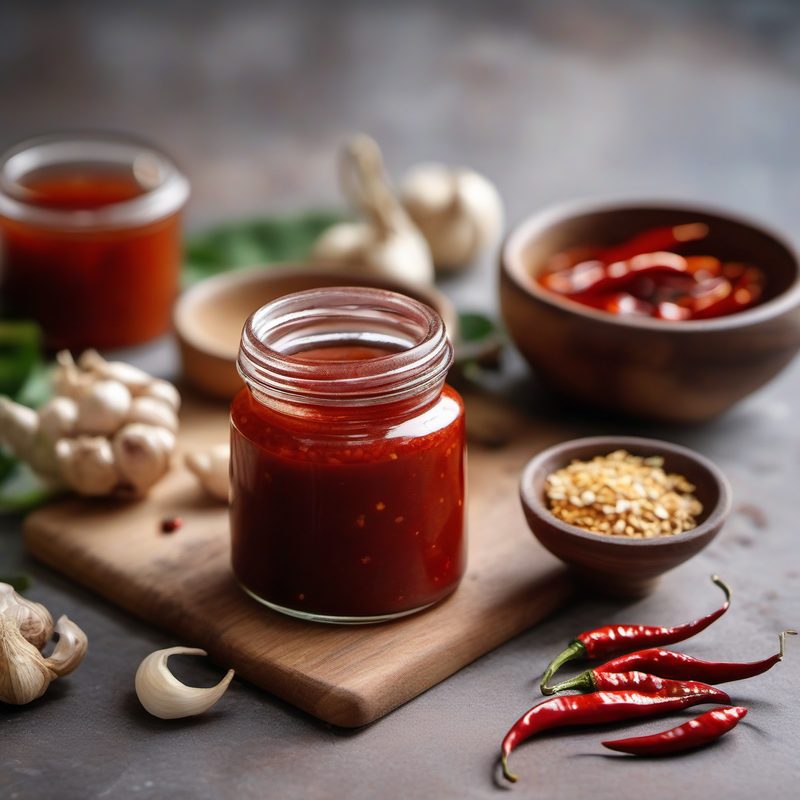
Chinese Spicy Sauce
A bold, versatile Chinese-style sauce that transforms bell peppers, dried chilies, ginger, and garlic into a coarse, aromatic paste — equally at home as a dipping sauce for spring rolls, a stir-fry base for noodles or vegetables, or a marinade for grilled meats, with a heat level you control entirely by how many chili seeds you include.
| Amount | Ingredient |
|---|---|
| 150 g (1 cup) | bell peppers (red, orange, or yellow), roughly chopped, seeds removed |
| 40 g (¼ cup) | dried red chilies (such as árbol, japones, or chiles de árbol), stemmed |
| 20 g (4 cloves) | garlic, peeled |
| 15 g (1 tbsp) | fresh ginger, peeled and roughly chopped |
| 15 g (1 tbsp) | sugar |
| 5 g (1 tsp) | tomato paste |
| 2 tbsp | soy sauce |
| 1 tbsp | sesame oil |
| 1 tbsp | rice vinegar |
| 60 ml (¼ cup) | water or low-sodium chicken broth |
| to taste | kosher salt |
| 1 tsp | cornstarch mixed with 1 tbsp cold water (optional, for thickening) |
Most Chinese chili sauces in supermarkets are either too sweet, too one-dimensional, or packed with preservatives and stabilizers. This homemade version avoids all of those pitfalls by starting with whole fresh bell peppers and dried chilies, processed into a textured paste that retains the brightness of the peppers and the deep, smoky heat of the dried chilies. The bell peppers provide natural sweetness and body — they are the canvas — while the dried chilies, fresh ginger, and garlic build layers of heat and aromatics. Tomato paste adds a subtle umami depth and color, and a touch of sugar balances the acidity and heat without making the sauce syrupy. The beauty of this recipe is its flexibility: want a milder sauce? Remove all the chili seeds before processing. Want something fiery? Keep them all and add a fresh bird's eye chili or two. A quick simmer melds the flavors, and a cornstarch slurry gives it a glossy, clingy finish that coats noodles, stir-fries, and dipping morsels with equal authority.
Ingredient notes: Choose ripe, sweet bell peppers — red, orange, or yellow (not green). Green peppers are under-ripe and more bitter, which can throw off the sauce's balance. Dried red chilies: chiles de árbol (thin, pointy, medium heat) or japones chilies (similar) work well. For less heat, use dried guajillo or ancho chilies — they are milder and fruitier. For more heat, include a couple of dried bird's eye chilies or arbol. The seeds are where most of the heat lives: remove all seeds for a mild, approachable sauce; leave half for medium heat; leave all for a genuinely spicy sauce. Do not use chili powder or red pepper flakes — they lack the whole-chili texture and flavor that makes this sauce special. Fresh ginger should be firm and unwrinkled; older ginger is fibrous and harder to blend into a smooth paste. Rice vinegar is preferable to white vinegar for its milder, rounder acidity. The tomato paste comes in a tube — leftover paste can be refrigerated for weeks.
- Food processor
- Small saucepan
- Chef's knife and cutting board
- Rubber spatula
- Fine-mesh strainer (optional, for a smoother sauce)
- Airtight jar or container for storage
- Measuring spoons
- Prepare the chilies and peppers (3 min). Remove the stems from the dried chilies. Decide on your desired heat level: for a mild sauce, slit the chilies open and shake out all the seeds (or use a knife to scrape them out). For medium heat, remove about half the seeds. For a fiery sauce, keep all the seeds. Roughly chop the bell peppers into 1-inch chunks, removing the stem, ribs, and all seeds. Peel and roughly chop the ginger. Peel the garlic cloves.
- Blend the base paste (2 min). In a food processor, combine the bell peppers, dried chilies (with your chosen amount of seeds), garlic, ginger, sugar, and tomato paste. Pulse 8 to 10 times (1-second pulses) until a coarse, textured paste forms. You want the mixture to look like a rough relish — some small chili pieces, some visible pepper chunks — not a smooth purée. Scrape down the sides of the bowl with a rubber spatula halfway through. If the paste seems too dry to process, add 1 tablespoon of water.
- Simmer the sauce (5–7 min). Transfer the paste to a small saucepan. Add the soy sauce, sesame oil, rice vinegar, and water (or chicken broth). Stir to combine. Bring to a simmer over medium heat, then reduce the heat to low. Simmer gently, stirring occasionally, for 5 to 7 minutes — the sauce will darken slightly, the raw garlic and ginger aromas will mellow, and the flavors will meld into a cohesive, rounded sauce. If the sauce looks too thick, add water 1 tablespoon at a time.
- Adjust the seasoning (1 min). Taste the sauce. It should be spicy, savory, slightly sweet, and bright with vinegar. Add salt if needed (go easy — the soy sauce provides significant saltiness). Add more sugar if the sauce tastes harsh or overly acidic. Add more rice vinegar if the sauce tastes flat or needs brightness.
- Thicken if desired (30 seconds). If you want a thicker, glossier sauce (ideal for dipping or glazing), stir the cornstarch slurry to recombine, then drizzle it into the simmering sauce while stirring constantly. Cook for 20–30 seconds until the sauce thickens and turns glossy. Remove from heat.
- Cool and store (optional). Let the sauce cool to room temperature. For a smoother sauce, pass it through a fine-mesh strainer, pressing on the solids with a rubber spatula. (This is optional — many people prefer the rustic, chunky texture.) Transfer to an airtight jar and refrigerate.
- Control the heat with the seeds. This is the most important variable in the recipe. Dried chili seeds contain most of the capsaicin (heat). By keeping all, some, or none of the seeds, you can make the same recipe range from "family-friendly mild" to "fire-breathing hot" without changing anything else. Taste a seed if you are unsure of your tolerance — it will tell you everything you need to know.
- Do not skip the tomato paste. A single teaspoon may seem insignificant, but tomato paste adds a deep umami note and a subtle sweetness that rounds out the sauce and ties the bell peppers and dried chilies together. Without it, the sauce can taste thin and one-dimensional.
- Texture is a personal choice. Some people want a smooth, emulsified dipping sauce; others want a chunky, textured stir-fry base. The recipe as written produces a moderately chunky sauce. For a smooth sauce, strain it through a fine-mesh strainer. For an even chunkier sauce, process it for fewer pulses (6 instead of 8–10).
- Let the sauce rest. Like most cooked sauces, this one improves significantly after an hour or two in the refrigerator. The flavors continue to meld, the heat becomes more integrated, and the sauce thickens to a perfect dipping consistency.
- Respect the simmer. Do not rush the simmering step. Five minutes of gentle cooking is what transforms raw garlic and ginger — which are harsh and pungent — into mellow, aromatic contributors to a balanced sauce. The sauce should be fragrant and cohesive, not raw or separated.
- Make it ahead. This sauce keeps for weeks in the refrigerator and actually improves with age. Make a double batch and keep it on hand for impromptu stir-fries, dipping platters, and marinades.
| Mistake | Why It Hurts | The Fix |
|---|---|---|
| Using green bell peppers | Green peppers are less sweet and more bitter, giving the sauce an unpleasant vegetal edge | Always use fully ripe red, orange, or yellow bell peppers |
| Skipping the simmer | The garlic and ginger taste harsh, raw, and pungent — the sauce lacks the mellow, rounded character that makes it versatile | Never skip the 5–7 minute simmer — it transforms the sauce from raw paste to cooked condiment |
| Adding all chili seeds without tasting first | The sauce becomes unpleasantly fiery and may be inedible for those with lower heat tolerance | Remove all seeds for the first attempt, then add seeds back gradually in future batches as you dial in your preferred heat level |
| Over-processing to a smooth purée | The sauce loses all texture and becomes a uniform, baby-food-like paste with no visual or textural interest | Pulse only 8–10 times — you want visible chili and pepper pieces throughout |
| Using pre-ground chili powder instead of whole dried chilies | The sauce lacks the complex, smoky depth and varied texture that only whole dried chilies provide | Always use whole dried chilies — they are easy to find at any grocery store in the international or produce section |
| Adding the cornstarch slurry too early | The sauce thickens before the flavors have fully melded, creating a gluey, unpleasantly thick sauce that is hard to adjust | Only add the slurry at the very end, after tasting and adjusting the seasoning |
| Not adjusting the vinegar at the end | The sauce can taste flat, heavy, or one-note — rice vinegar provides the acidity that lifts and balances the heat and richness | Add the soy sauce and vinegar before simmering, then taste and add more vinegar at the end if the sauce needs brightness |
- Garlic-Lover's Version: Double the garlic to 8 cloves. The sauce will be aggressively garlicky — ideal for dipping dumplings or fried wontons.
- Smoky Chinese Sauce: Add 1 teaspoon of smoked paprika and ½ teaspoon of ground Sichuan peppercorns along with the tomato paste. The Sichuan peppercorns add a unique numbing, citrusy tingle that balances the chili heat.
- Sweet Soy Version (Penyet-style): Replace the soy sauce with 2 tablespoons of kecap manis (sweet Indonesian soy sauce) and reduce the sugar to 1 teaspoon. The sauce becomes thicker, sweeter, and more molasses-like — incredible with fried chicken.
- Peanut-Chili Sauce: Add 2 tablespoons of smooth peanut butter and 1 tablespoon of coconut milk when simmering. The sauce becomes rich, creamy, and nutty — a perfect dipping sauce for satay skewers or spring rolls.
- Five-Spice Chinese Sauce: Add ½ teaspoon of Chinese five-spice powder with the other dry ingredients. The star anise, cinnamon, and clove notes add warmth and complexity that pairs beautifully with roasted pork or duck.
- Ginger-Scallion Sauce: Reserve the ginger but replace the bell peppers with 1 cup of thinly sliced scallions (green and white parts). Simmer for only 3 minutes to keep the scallions bright. This is a classic Cantonese sauce for poached chicken.
- Miso-Chili Sauce: Reduce the soy sauce to 1 tablespoon and add 1 tablespoon of white miso paste when simmering. The miso adds a fermented umami depth that is spectacular with grilled eggplant or tofu.
| Storage Method | Details |
|---|---|
| Refrigerator | Store in an airtight glass jar for up to 3 weeks. The flavor deepens and improves over the first week. Stir before each use. The sesame oil may solidify slightly when chilled — let the sauce sit at room temperature for 10 minutes, then stir. |
| Freezer | Freeze in small portions (ice cube trays work perfectly) for up to 3 months. Transfer frozen cubes to a zip-top bag. Thaw individual portions in the refrigerator overnight or at room temperature for 30 minutes. The texture remains excellent after freezing. |
| Room temperature | If serving as a dipping sauce, do not leave at room temperature for more than 2 hours. Return unused portions to the refrigerator promptly. |
This versatile sauce pairs with a wide range of foods and drinks:
- As a dipping sauce with spring rolls, dumplings, or fried wontons: A crisp, cold lager (Tsingtao, Sapporo, or Asahi) — the beer's carbonation and mild bitterness are the perfect palate cleanser between bites of fried, sauce-dipped morsels.
- Tossed with noodles or rice: A slightly off-dry Riesling (Mosel or Finger Lakes) or a Gewürztraminer (Alsace). The wine's touch of sweetness and aromatic profile tame the sauce's heat and complement the ginger and garlic.
- As a stir-fry sauce for vegetables or tofu: An unoaked Chardonnay or a crisp Sauvignon Blanc (Loire or Marlborough). The wine's bright acidity cuts through the sauce's richness and refreshes the palate.
- As a marinade for grilled or roasted meats: A light, chillable red like a Beaujolais (Gamay) or a Pinot Noir (Oregon). Serve the red slightly cool (55–60°F / 13–15°C) so the wine's fruit and acidity can stand up to the sauce's heat.
- Sake pairing: A dry, slightly fruity junmai sake served chilled — the clean, rice-based character harmonizes perfectly with the spicy, savory sauce.
| Per Serving (about 2 tablespoons / 30 ml) | |
|---|---|
| Calories | 35 |
| Protein | 1 g |
| Fat | 1.5 g |
| Carbohydrates | 5 g |
| Fiber | 1 g |
| Sugar | 3 g |
| Sodium | 280 mg |
Nutrition values are approximate and based on red bell pepper, dried chiles de árbol (with half seeds), vegetable oil, soy sauce, and optional cornstarch slurry. Actual values will vary based on chili type, seed inclusion, and exact proportions.
How spicy is this sauce with all the seeds?
With all seeds from 40 g (¼ cup) of dried chiles de árbol, the sauce is genuinely spicy — approaching a 7 or 8 on a 10-point scale. It has immediate, aggressive heat that builds on the tongue and lingers. This is the kind of heat that chili heads will love but that may overwhelm casual diners. For a first attempt, remove all the seeds and taste the finished sauce. You can always add more heat next time by keeping some seeds in the blend.
Can I use fresh chilies instead of dried?
Fresh chilies (like red Thai bird's eye, Fresno, or red jalapeño) will produce a brighter, more vegetal sauce with a different kind of heat — sharper and more immediate rather than the deeper, more rounded heat of dried chilies. If using fresh chilies, use about 60 g (½ cup), reduce the water to 2 tablespoons (fresh chilies contain more moisture), and simmer for 8–10 minutes to cook off the raw chili flavor.
How do I use this sauce in a stir-fry?
Heat 1 tablespoon of oil in a wok or skillet over high heat. Stir-fry your protein (chicken, beef, shrimp, or tofu) until cooked through. Add 3–4 tablespoons of this sauce and toss to coat. Add vegetables (broccoli, snap peas, bell peppers) and a splash of water or broth. Toss until the sauce coats everything evenly. Serve over steamed rice or noodles.
What if the sauce is too thick or too thin?
Too thick: add water or chicken broth 1 tablespoon at a time while simmering, stirring to incorporate. Too thin: simmer for an additional 2–3 minutes to reduce, or add a cornstarch slurry (½ teaspoon cornstarch mixed with 1 tablespoon cold water) and cook for 20 seconds until thickened.
Can I use this as a marinade?
Absolutely. Toss chicken thighs, pork chops, shrimp, or firm tofu with ¼ cup of the sauce (undiluted) and let marinate for 30 minutes to 2 hours in the refrigerator. Grill, pan-sear, or bake as usual. The sugar in the sauce will promote beautiful browning and caramelization — watch carefully to prevent burning.
What is the best way to remove seeds from dried chilies?
Cut off the stem with kitchen shears or a knife. Slit the chili lengthwise with a knife or your fingers. Shake the chili over a bowl or plate — most seeds will fall out. For stubborn seeds, use a small knife or your fingers to scrape them out. Wear gloves if you have sensitive skin — chili oils can linger on your hands and cause burning if you touch your eyes or face.
- Spicy Beef Stir-Fry (Volume 2)
- Teriyaki Sauce (Volume 2)
- Basic Gochujang Sauce (Volume 2)
- Scotch Bonnet Pepper Hot Sauce (Volume 2)
- Yogurt Gochujang Fusion Sauce (Volume 2)
Recipe from "The Italian Kitchen" by Vita Milanese — Volume 2: Sunday Sauce
Recipe from The Italian Kitchen by Vita Milanese — Volume 2 · Sunday Sauce. Discover all volumes on the ebook page.