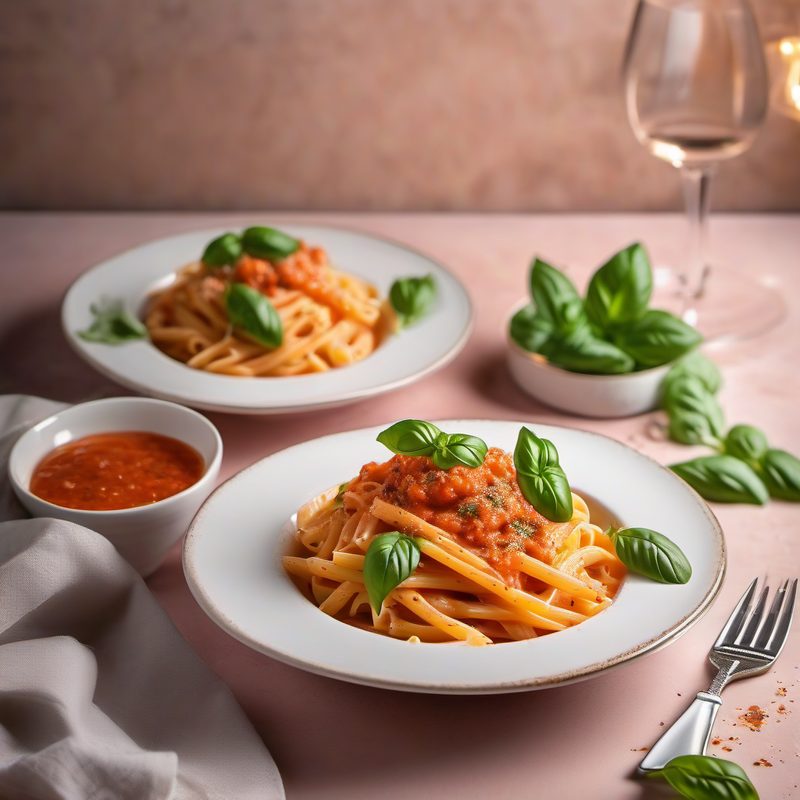
Spaghettoni Yellow Tomato
A celebration of the sweetest, sunniest tomato of the season—golden datterini, gently coaxed into a thick, jammy sauce with garlic, chili, and oregano, then tangled with thick spaghettoni that catch every drop. No cream, no cheese, no shortcuts: just olive oil, patience, and peak-season yellow tomatoes that taste like summer concentrated into spoonfuls.
| Amount | Ingredient |
|---|---|
| 12 oz | Spaghettoni |
| 1 lb | Yellow datterini or yellow cherry tomatoes, halved |
| ½ cup | Extra-virgin olive oil |
| 2 | Garlic cloves, smashed |
| 1 | Dried red chili (peperoncino), crumbled, or ¼ tsp red pepper flakes |
| 1 tsp | Dried oregano |
| 1 tbsp | Kosher salt (for pasta water) |
| ½ tsp | Kosher salt |
| ½ cup | Fresh basil leaves, loosely packed, torn |
| ½ cup | Reserved pasta water (as needed) |
This is the yellow-tomato answer to the classic spaghetti al pomodoro—a recipe that trades the deep umami of red tomatoes for the bright, almost tropical sweetness of golden datterini. Where red tomatoes need long cooking or a splash of sugar to tame their acidity, yellow datterini are naturally mild, low-acid, and honey-sweet, making them ideal for a gentler, shorter simmer that preserves their delicate character.
The technique is deliberately simple: halve the tomatoes, warm them gently in olive oil with smashed garlic and a dried chili, season with oregano and salt, then let them cook slowly until they surrender their shape and transform into a thick, concentrated sauce. No water, no stock, no tomato paste—the tomatoes release their own juices, and slow evaporation does the rest. The result is a sauce that's more like a rustic marmalade than a thin tomato coating—thick enough to cling to the thickest spaghetti shape in the pasta aisle.
Spaghettoni—the wider, more substantial cousin of spaghetti—is the ideal partner here. Its heft stands up to the chunky sauce without being overwhelmed, and each strand delivers a satisfying chew against the soft, broken-down tomato pieces. A splash of starchy pasta water at the end emulsifies the oil and tomato juices into a creamy, clinging finish, and a handful of fresh basil at the last moment adds color and a peppery lift against the sunny sweetness.
Use level tablespoons and standard US measuring cups. All produce is medium unless specified.
🥘 Equipment
- Large pot (6-qt) for pasta
- Large skillet or sauté pan (12-inch)
- Colander
- Chef's knife and cutting board
- Measuring cups and spoons
- Large serving bowl or platter
- Tongs
📋 Preparation
Step 1 — Build the Tomato Sauce (20 minutes)
Halve all the yellow datterini tomatoes crosswise through the equator. If using larger yellow cherry tomatoes, quarter them so each piece is roughly ½ inch.
In a large skillet, combine ½ cup extra-virgin olive oil, the 2 smashed garlic cloves, and the crumbled dried chili. Place over medium-low heat and warm gently until the garlic sizzles softly and releases its fragrance, about 2 minutes. Do not let the garlic brown—smoky, browned garlic will mask the delicate sweetness of the yellow tomatoes.
Add the halved yellow tomatoes, 1 teaspoon dried oregano, and ½ teaspoon kosher salt. Stir to coat every piece with the seasoned oil. Reduce heat to low and cook, stirring occasionally, for 12 to 15 minutes, until the tomatoes have softened dramatically and begun to break down into a thick, jammy sauce. Most of the tomatoes should have collapsed, but you want some intact pieces for texture.
Patience is the key here. Yellow datterini have a higher sugar-to-acid ratio than red tomatoes, which means they can scorch if the heat is too high. Cook them low and slow, and you'll be rewarded with a sauce that tastes like tomato preserves—concentrated, sweet, and complex. If the sauce looks dry before the tomatoes have broken down, add 2 tablespoons of water and continue cooking; you want a thick, spreadable consistency, not a watery one.
Step 2 — Cook the Spaghettoni (10 minutes)
While the sauce simmers, bring 4 quarts of water to a rolling boil in a large pot. Add 1 tablespoon kosher salt. Add the 12 oz spaghettoni and cook until al dente, following package directions (typically 10–12 minutes for spaghettoni).
Reserve ½ cup of the pasta cooking water before draining. Drain the spaghettoni well—do not rinse.
Spaghettoni takes slightly longer than regular spaghetti because of its thicker diameter. Start checking at 9 minutes and pull it when it's firm to the bite but no longer chalky at the center. The pasta will continue cooking in the sauce for a few seconds, so err on the side of slightly underdone.
Step 3 — Toss and Finish (2 minutes)
Remove the garlic cloves from the tomato sauce (they've done their job perfuming the oil). If you prefer a smoother sauce, use the back of a spoon to crush any remaining whole tomatoes in the pan.
Add the hot drained spaghettoni directly to the skillet of tomato sauce. Toss with tongs over low heat for about 30 to 45 seconds, allowing the pasta to absorb some of the sauce. Add reserved pasta water 1 to 2 tablespoons at a time, tossing between additions, until the sauce loosens enough to coat every strand evenly and moves freely in the pan. You'll likely need 3 to 4 tablespoons total.
Watch the pan closely here—the sauce is thick and can stick if the heat is too high. Toss constantly, adding pasta water gradually until the sauce turns from a chunky mass into a creamy, clinging coating. The starch in the pasta water emulsifies the oil and tomato juices, creating a silky finish without a drop of cream.
Remove the skillet from the heat. Add the torn basil leaves and toss once more just to distribute. The residual heat will wilt the basil gently without cooking it flat.
Transfer to a warmed serving platter or divide among 4 warmed bowls. Finish with an extra drizzle of extra-virgin olive oil and a few fresh basil leaves on top. Serve immediately.
🧑🍳 Chef's Tips
- Yellow datterini are not interchangeable with red cherry tomatoes: Yellow datterini (sometimes sold as "sweet golden cherry tomatoes") are significantly sweeter and lower in acid. If you substitute red cherry tomatoes, the sauce will be more acidic and less complex—add a pinch of sugar (about ½ teaspoon) at the end to compensate.
- Don't skip the peperoncino: The dried chili doesn't add aggressive heat—it adds a subtle warmth that lifts the sweet tomato flavor and keeps the dish from tasting flat. One dried peperoncino crumbled over the oil is enough for a gentle warmth. For more heat, add a second one or keep the seeds in. For no heat, omit it, but you'll lose a dimension of flavor.
- Smashed garlic, not minced: Smashing the cloves with the flat side of your knife releases just enough aroma without the intensity of minced garlic, which can burn and turn bitter during the long, slow simmer. Remove the cloves before tossing with the pasta so nobody bites into a whole garlic clove.
- Oregano is the herb of choice here: Where red tomato sauces often call for basil throughout cooking, yellow tomatoes pair beautifully with the earthy, slightly floral notes of dried oregano. The basil comes in at the very end for freshness. Don't reverse this order or add the basil to the simmering sauce—it will turn black and bitter.
- Spaghettoni substitutes: If you can't find spaghettoni, use spaghetti (thicker brands like De Cecco #12 work well), bucatini, or even pici (hand-rolled Sienese pasta). Avoid thin spaghetti or angel hair—the sauce is too chunky and will slide off delicate strands. Fresh pasta is also not recommended; it's too tender to stand up to the thick sauce and will turn to mush.
- Make it a meal: Serve with crusty bread to mop up any remaining sauce from the pan or the bottom of the bowls—the concentrated tomato-olive oil liquid that settles is pure gold.
❌ Common Mistakes
| Mistake | Why It Hurts | The Fix |
|---|---|---|
| Browning the garlic | Burnt garlic's acrid bitterness overpowers the delicate sweet tomato flavor | Warm the garlic over medium-low heat and remove the pan from the burner the moment it sizzles and releases fragrance—it should be pale gold, not brown |
| Cooking on high heat | Yellow tomatoes burn before they break down due to their high sugar content; the sauce turns dark, acrid, and caramelized rather than bright and sweet | Keep the heat on low throughout the 15-minute cook; the sauce should barely bubble, not spatter |
| Skipping the pasta water | The thick, jammy sauce won't coat the pasta evenly; it stays clumped in the pan while the spaghetti remains dry and bare | Always reserve and add starchy pasta water 1–2 tablespoons at a time until the sauce turns glossy and clings to the pasta |
| Overcooking the basil | Basil added during cooking turns black and slimy, releasing bitter compounds | Add torn basil only after removing the pan from the heat—the residual warmth is enough to wilt it gently |
| Under- or over-salting the pasta water | Too little salt leaves the pasta bland; too much makes the dish inedible (and the yellow tomatoes' sweetness can make excessive saltiness especially noticeable) | Use exactly 1 tablespoon kosher salt per 4 quarts water—this seasons the pasta internally without making the final dish salty |
| Using red cherry tomatoes without adjustment | The higher acidity clashes with the delicate olive oil and oregano; the dish tastes harsh instead of sweet | If red cherry tomatoes are all you have, add ½ teaspoon sugar to the sauce at the end and use a milder extra-virgin olive oil |
| Draining the pasta too early | Spaghettoni that sits in the colander continues cooking from residual heat and clumps together | Drain the pasta and add it directly to the sauce within 30 seconds; if you must wait, toss it with a drizzle of olive oil in the colander |
🔗 Related Recipes
- Spaghetti with Marinated Cherry Tomatoes, Basil & Stracciatella (Vol. 1)
- Simple Spaghetti al Pomodoro (Classic Cooked Sauce)
- Spaghetti Aglio e Olio
- Bucatini all'Amatriciana
- Pasta alla Norma (Eggplant and Ricotta Salata)
- Spaghetti with Lemon, Capers & Breadcrumbs
🏷️ Search Tags
Photo reference: `vol1_165.png` — A generous tangle of thick spaghettoni in a wide, shallow white bowl, glistening with olive oil and coated in a thick, golden, jammy tomato sauce with visible halved yellow cherry tomato pieces; torn fresh basil scattered on top; a final drizzle of extra-virgin olive oil catching the light; warm, sunlit food photography with shallow depth of field, golden-hour lighting, and a rustic ceramic or linen backdrop.
Recipe from "The Italian Kitchen" by Vita Milanese — Volume 1: Pasta Perfetto
Recipe from The Italian Kitchen by Vita Milanese — Volume 1 · Pasta Perfetto. Discover all volumes on the ebook page.