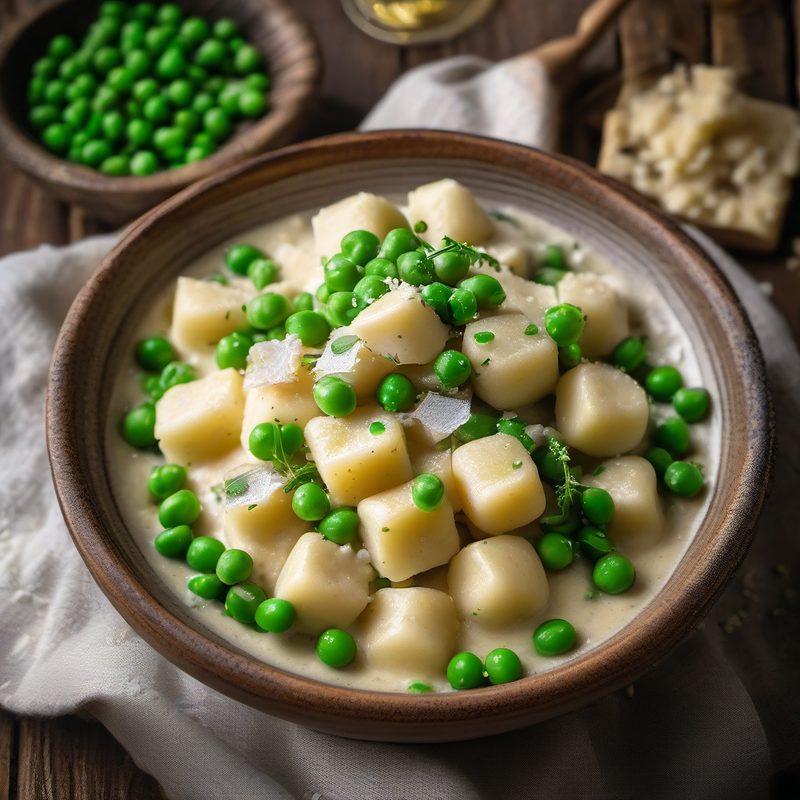
Ricotta Gnocchi Peas Guanciale
Cloud-light ricotta gnocchi, no potato in sight—these delicate pillows come together in minutes and cook in seconds. Tossed with crispy guanciale, sweet peas, and a silky Pecorino-cream sauce, this is the 30-minute pasta-adjacent dish that tastes like you fussed for an hour.
| Amount | Ingredient |
|---|---|
| 2 tbsp | Fresh mint leaves, torn |
| 1 tsp | Lemon zest, finely grated (from 1 lemon) |
| Black pepper, freshly ground |
Real gnocchi purists might scoff at the idea of ricotta gnocchi—no potatoes! no russeting! no delicate flour-to-starch ratios!—but here's the thing: ricotta gnocchi are easier, faster, and every bit as luxurious as their potato cousins. The key is keeping the dough as light as possible: work it just until it comes together, and no more. Overworking develops gluten, and gluten is the enemy of tender gnocchi. The sauce is a classic Roman trattoria move—render guanciale until crisp, wilt scallions and peas in the fat, deglaze with white wine, then toss in the just-cooked gnocchi with Pecorino and pasta water for a sauce that clings like velvet. Fresh mint and lemon zest cut through the richness, making each bite as bright as it is comforting. At about 450 calories per serving, this is the kind of weeknight magic that feels like a splurge but isn't.
For the Ricotta Gnocchi
For the Sauce
For Garnish
All produce is medium size unless specified. Use standard US measuring cups and spoons.
🥘 Equipment
- Large pot (6-quart or larger)
- Large skillet (12-inch), preferably nonstick or stainless steel
- Rimmed baking sheet or large platter (for holding gnocchi)
- Chef's knife and cutting board
- Wooden spoon or silicone spatula
- Slotted spoon or spider strainer
- Bench scraper or pastry cutter (optional, for cutting gnocchi)
- Large colander
- Microplane or fine grater
- Paper towels
- Fork
📋 Preparation
Step 1 — Make the Gnocchi Dough (10 minutes)
Line a fine-mesh strainer with paper towels or a clean kitchen towel. Add the ricotta and let it drain for 5 minutes—this removes excess moisture that would make the dough sticky. (If your ricotta is unusually wet, let it drain up to 15 minutes.)
In a large bowl, combine the drained ricotta, 1 cup Pecorino Romano, eggs, ½ teaspoon salt, and ¼ teaspoon pepper. Stir with a wooden spoon or silicone spatula until smooth and thoroughly combined.
Add the flour all at once and stir until a soft, slightly sticky dough forms. Do not overmix—stop as soon as you see no more dry flour. The dough should be tender and a little tacky, not stiff.
The less you work the dough, the lighter the gnocchi. Gluten develops with handling, and gluten makes ricotta gnocchi tough. As soon as it comes together, you're done.
Step 2 — Shape the Gnocchi (10 minutes)
Lightly dust your work surface with flour. Turn the dough out onto the floured surface and sprinkle the top with a little more flour. With floured hands, gently pat the dough into a rough rectangle.
Divide the dough into 4 equal pieces. Using your palms, gently roll each piece into a rope about ¾ inch (2 cm) thick. If the rope sticks, dust your hands and the rope lightly with more flour—but use as little as possible. Cut each rope crosswise into ½-inch (1.5 cm) pieces using a bench scraper or a floured knife.
Working with one piece at a time, press the center of each gnoccho gently with your floured thumb or the tines of a fork to create a small indentation. (The indentation helps the gnocchi cook evenly and gives the sauce a place to cling.) Transfer the shaped gnocchi to a lightly floured rimmed baking sheet or large platter in a single layer. Do not let them touch.
The indent doesn't have to be perfect—a gentle thumbprint is enough. Don't flatten the gnocchi, just dimple them.
Step 3 — Render the Guanciale and Build the Sauce (8 minutes)
While the gnocchi rest, set a large 12-inch skillet over medium heat. Add the guanciale cubes in a single layer and cook, stirring occasionally, until the fat renders and the meat turns deep golden and crispy—about 5 minutes.
Use a slotted spoon to transfer the crispy guanciale to a paper-towel-lined plate, leaving the rendered fat in the skillet (there should be about 2 tablespoons).
Add the sliced scallion to the hot fat and cook, stirring, until softened and fragrant—about 2 minutes.
Add the frozen peas and cook, stirring, until bright green and warmed through—about 2 minutes.
Pour in the white wine, scraping up any browned bits from the bottom of the skillet with a wooden spoon. Let the wine bubble and reduce by about half—30 seconds. Remove the skillet from the heat and set aside while you cook the gnocchi.
Step 4 — Cook the Gnocchi (3 minutes)
Bring a large pot of generously salted water (about 1½ tablespoons kosher salt per 4 quarts of water) to a rolling boil.
Gently drop the gnocchi into the boiling water, about half the batch at a time to avoid crowding. Do not stir for the first 30 seconds—this lets the exterior set. Then give them a gentle stir with a wooden spoon or slotted spoon. The gnocchi are done when they float to the surface, about 90 seconds to 2 minutes after they go in.
Use a slotted spoon or spider strainer to transfer the floating gnocchi directly to the skillet with the peas and guanciale fat. Reserve about 1 cup of the pasta cooking water before you drain the pot.
Gnocchi cook fast—working in batches prevents the water from cooling down and the gnocchi from sticking together.
Step 5 — Mantecare (Finish and Serve) (2 minutes)
Return the skillet to medium-low heat. Add ¼ cup of the reserved pasta cooking water and toss the gnocchi gently with a silicone spatula to coat them in the sauce.
Sprinkle in the ¼ cup Pecorino Romano for finishing. Remove the skillet from the heat and toss vigorously until the cheese melts and the sauce emulsifies into a creamy, glossy coating. If the sauce looks tight or thick, add another tablespoon or two of pasta water and toss until it loosens.
Add the crispy guanciale back to the skillet and gently fold it in.
Divide among warm bowls. Top each serving with torn mint leaves, finely grated lemon zest, a generous grind of black pepper, and an extra shower of Pecorino Romano. Serve immediately.
The mantecare technique—emulsifying cheese and starchy pasta water off the heat—produces a sauce that clings to every gnoccho without being greasy. The residual heat melts the cheese; going off-heat prevents it from breaking into a greasy mess.
🧑🍳 Chef's Tips
- Drain the ricotta. Even thick ricotta from the store can be watery. Five minutes of draining through a paper-towel-lined sieve removes enough liquid to make the dough manageable without extra flour. Less flour = lighter gnocchi.
- Work the dough as little as humanly possible. Ricotta gnocchi are the opposite of bread: you want to develop zero gluten. Mix until just combined, shape gently, and stop. A light hand is everything.
- Use frozen peas. They're sweeter and more consistent than most fresh peas at the supermarket. No need to thaw—they'll cook in the 2 minutes you sauté them.
- Guanciale, not bacon. Guanciale (cured pork cheek) has a higher fat content and a more delicate, porky flavor than bacon. Pancetta is an acceptable substitute; bacon works in a pinch but adds a smoky flavor that changes the character of the dish.
- Save the starchy pasta water. It's the secret to a silky, emulsified sauce. The starch acts as a binder, allowing the Pecorino and fat to form a creamy coating instead of a greasy pool.
- Work in batches. Boiling too many gnocchi at once drops the water temperature, causing them to stick together and cook unevenly. Cook them in two batches if needed.
- Don't rinse the gnocchi. A light dusting of flour is fine—it cooks off. Rinsing washes away the surface starch that helps the sauce cling.
❌ Common Mistakes
| Mistake | Why It Hurts | The Fix |
|---|---|---|
| Overworking the dough | Develops gluten, making gnocchi dense and chewy instead of light and tender. | Mix until the flour is just incorporated. Stop. A few lumps are fine. |
| Using wet ricotta | Forces you to add more flour to compensate, which toughens the dough. | Drain the ricotta through a paper-towel-lined sieve for 5–10 minutes before mixing. |
| Boiling gnocchi too long | They absorb water, become waterlogged, and fall apart. | Scoop them out the moment they float—usually within 90 seconds. |
| Skipping the starchy pasta water | The sauce won't emulsify; you'll end up with greasy cheese clumps instead of a silky coating. | Always reserve 1 cup of pasta water before draining. Add it a tablespoon at a time. |
| Overcrowding the boiling water | The temperature drops, gnocchi stick together, and they cook unevenly. | Cook in two batches if necessary. Stir gently after 30 seconds to prevent sticking. |
| Reheating the sauce on high heat | The sauce breaks and the cheese turns grainy. Always finish off heat. | After adding the cheese, remove from heat and toss vigorously. Residual heat is enough. |
💡 Variations
| Variation | How To |
|---|---|
| Vegetarian Version | Omit the guanciale. Sauté 2 tablespoons of butter with the scallion instead, then proceed. Use a vegetarian Pecorino-style cheese (or sub Parmigiano-Reggiano). |
| Add Asparagus | Cut 6 asparagus spears into 1-inch pieces. Add to the skillet along with the peas. The earthy-bitter note is lovely with the mint and lemon. |
| Spicy Kick | Add ½ teaspoon red pepper flakes (or 1 small dried chili, crumbled) to the guanciale fat along with the scallion. The heat cuts through the richness beautifully. |
| Creamy Version | Stir 2 tablespoons of heavy cream into the sauce just before adding the cheese. This produces a richer, more indulgent dish. |
| Herb Swap | Replace the mint with fresh basil, or use a combination of both. Dill (surprisingly) also works—its slight anise character pairs well with peas. |
| Make Them Ahead | Shape the gnocchi, freeze them on a floured baking sheet until solid (about 1 hour), then transfer to a freezer bag. Cook directly from frozen—add an extra 30 seconds to the boiling time. |
❄️ Storage & Leftovers
| Method | Details |
|---|---|
| Refrigerator | Store assembled gnocchi and sauce in an airtight container for up to 1 day. The gnocchi will soften but will still be delicious. |
| Freezer (Gnocchi Only) | Freeze shaped, uncooked gnocchi on a floured baking sheet for 1 hour, then transfer to a freezer bag. Keep for up to 1 month. Cook directly from frozen—add 30 seconds to the boil time. |
| Reheating | Reheat leftovers in a skillet over low heat with a splash of water or pasta water, tossing gently until warmed through. Do not microwave—it will turn the gnocchi to mush. |
🍷 Wine Pairing
| Wine | Why |
|---|---|
| Frascati Superiore (Lazio) | From the hills outside Rome, this crisp, slightly nutty white is the classic pairing for guanciale-and-Pecorino dishes. Its bitter-almond finish echoes the Pecorino's saltiness, while the bright acidity cuts through the rendered fat. |
| Verdicchio dei Castelli di Jesi | A minerally, lemon-scented white from Le Marche. The salinity and citrus notes mirror the lemon zest and mint in the dish, while the medium body stands up to the richness of the gnocchi. |
| Pinot Grigio (Alto Adige) | A lean, alpine-style Pinot Grigio (not the bland supermarket kind). Its crisp acidity and subtle green-apple notes refresh the palate between creamy, cheesy bites. |
| Chianti Classico | If you prefer red, go light: a young, unoaked Chianti Classico with bright cherry acidity works surprisingly well. Serve slightly cool (55–60°F) to emphasize freshness over tannin. |
🥗 Suggested Side Dishes
- Simple arugula salad with lemon juice, shaved Parmigiano-Reggiano, and pine nuts
- Sautéed broccolini with garlic and red pepper flakes
- Grilled zucchini ribbons with lemon and olive oil
- Crusty sourdough or ciabatta for sopping up any remaining sauce
- Roasted cherry tomatoes with fresh thyme
- Radicchio and endive salad with orange segments and a mustard vinaigrette (the bitterness is a great counterpoint to the rich gnocchi)
📊 Nutrition (per serving, estimated)
| Calories | Protein | Fat | Carbs | Fiber |
|---|---|---|---|---|
| 450 | 22 g | 24 g | 35 g | 3 g |
Nutrition is an estimate based on standard ingredient quantities. Values will vary with ricotta brand, guanciale fat rendering, and Pecorino absorption.
❓ Frequently Asked Questions
Can I make ricotta gnocchi with part-skim ricotta?
You can, but the gnocchi will be noticeably less tender and rich. Whole-milk ricotta provides the fat and moisture content needed for that cloud-like texture. If you must use part-skim, drain it thoroughly and reduce the flour by 2 tablespoons.
My gnocchi fell apart in the water. What went wrong?
Most likely one of three things: (1) the dough was too wet (didn't drain the ricotta), (2) the dough was overworked (gluten made it dense and waterlogged), or (3) the water wasn't boiling vigorously enough. Next time, drain the ricotta longer and handle the dough more gently.
Can I substitute pancetta or bacon for the guanciale?
Yes. Pancetta is the closest substitute—same cut (pork belly), same curing, no smoke. Bacon adds a smoky flavor that's not traditional but still delicious. If using bacon, choose a low-sugar variety; sweet-cured bacon can burn in the pan.
Why go off-heat to add the cheese?
High heat causes the Pecorino's proteins to seize and the fat to separate, producing a grainy, greasy mess instead of a creamy, emulsified sauce. Off-heat, the residual warmth gently melts the cheese into a silky coating.
Can I use dried pasta instead of making gnocchi?
Absolutely. Cook 12 oz of dried orecchiette, shells, or small tubular pasta, reserve pasta water, and finish the sauce in the skillet as directed. It won't be gnocchi, but it will be a very good pasta with peas and guanciale.
My dough was too sticky to shape. What can I do?
Lightly dust your hands and work surface with flour, and keep dusting as needed. If it's truly unworkable (sticking despite generous flour), the ricotta was too wet. Add flour 1 tablespoon at a time, mixing gently, until the dough holds together. But start over with well-drained ricotta next time.
🔗 Related Recipes
- Gnocchi alla Romana (Baked Semolina Gnocchi)
- Potato Gnocchi with Gorgonzola Cream
- Ricotta Cavatelli with Broccoli Rabe and Sausage
- Orecchiette with Peas, Guanciale, and Pecorino
- Pasta alla Gricia (Guanciale, Pecorino, and Black Pepper)
- Ravioli di Ricotta al Burro e Salvia (Ricotta Ravioli with Brown Butter and Sage)
🏷️ Search Tags
Photo reference: `vol1_42.png` — A wide, shallow bowl of delicate ricotta gnocchi glistening in a creamy Pecorino emulsion, studded with bright green peas and scattered with crispy golden guanciale cubes. Torn fresh mint and finely grated lemon zest are scattered on top. Warm, golden-hour lighting on a rustic linen-draped cream table. Shallow depth of field, steam rising.
Recipe from "The Italian Kitchen" by Vita Milanese — Volume 1: Pasta Perfetto
Recipe from The Italian Kitchen by Vita Milanese — Volume 1 · Pasta Perfetto. Discover all volumes on the ebook page.