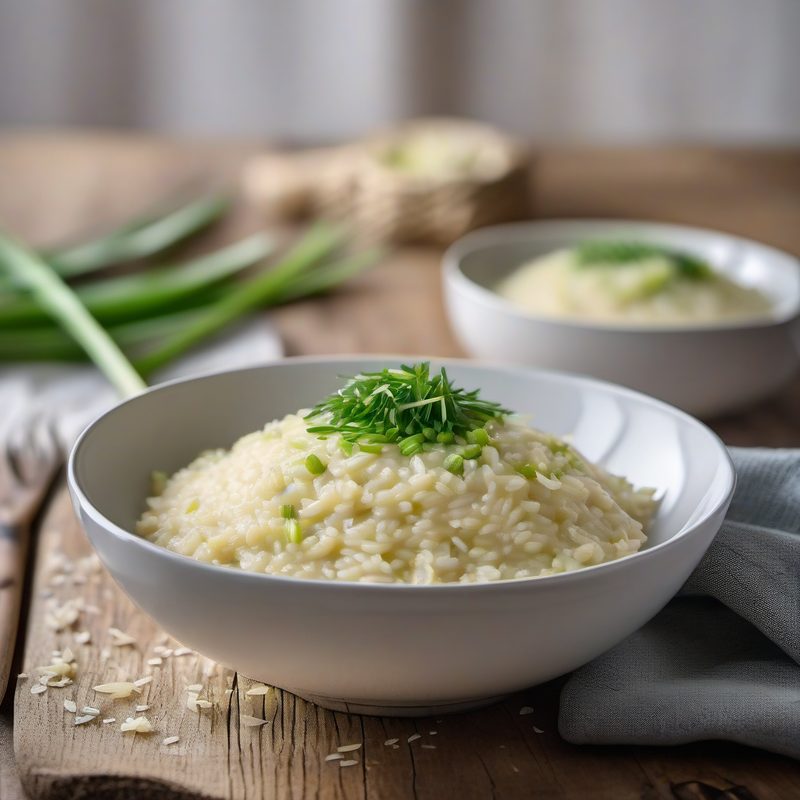
Leek Risotto (Risotto ai Porri)
A delicate, creamy risotto where sweet, slowly-cooked leeks melt into Carnaroli rice — proof that the simplest ingredients make the most elegant Italian first course.
| Amount | Ingredient |
|---|---|
| 1½ cups (320 g) | Carnaroli rice |
| 2 medium (250 g) | leeks, white and pale green parts only |
| 4 cups (1 l) | vegetable broth, hot |
| ½ cup (100 ml) | dry white wine |
| 3 tbsp (45 g) | butter, for the leeks |
| 3½ tbsp (50 g) | butter, for the mantecatura |
| ½ cup (50 g) | Parmigiano Reggiano, grated |
| kosher salt, to taste | |
| freshly ground black pepper, to taste |
There is a quiet magic in leek risotto. Where other risottos shout with saffron, truffle, or seafood, this one whispers: leeks cooked until they are butter-soft and sweet, folded into rice that has been toasted, deglazed with white wine, and slowly coaxed with hot broth into a creamy, all'onda texture. It is the risotto of northern Italian home cooking — humble, generous, and deeply comforting. A generous hand with Parmigiano in the final mantecatura is all it needs.
Ingredient notes: Use only the white and pale green parts of the leeks — the dark green leaves are tough and bitter. Slice them thinly so they soften evenly. Carnaroli is ideal for its creamy texture and firm bite; Arborio is a fine substitute. The butter appears twice — once to cook the leeks, once for the final mantecatura — so don't skimp on either.
- Large, heavy-bottomed sauté pan or Dutch oven
- Medium saucepan (for keeping the broth hot)
- Wooden spoon or heatproof spatula
- Chef's knife and cutting board
- Fine grater or Microplane (for Parmigiano)
- Prepare the leeks (5 min). Trim off the dark green tops and root ends. Slice the leeks in half lengthwise, rinse well under cold water to remove any grit, then slice thinly crosswise.
- Soften the leeks (5 min). Melt 3 tablespoons of butter in the pan over medium heat. Add the leeks and cook, stirring occasionally, until tender and lightly golden — about 5 minutes. Season with a pinch of salt.
- Toast the rice (2 min). Add the Carnaroli rice and stir constantly for 2 minutes until the grains turn translucent at the edges. This toasting seals the rice so it cooks creamy outside, al dente inside.
- Deglaze with wine (1 min). Pour in the white wine and stir until the alcohol has evaporated completely.
- Cook the risotto (15 min). Add the hot broth one ladle at a time, waiting for each addition to be absorbed before adding the next, and stirring frequently. Cook for about 15 minutes, until the rice is al dente.
- Mantecatura (2 min). Off the heat, stir in the remaining butter and the grated Parmigiano. Cover the pan for a minute until the butter melts, then stir energetically until the risotto is glossy and creamy — "all'onda," loose enough to ripple when the pan is tilted.
- Serve (1 min). Spoon into warm bowls and finish with a generous grinding of black pepper.
- Wash the leeks thoroughly. Leeks grow in sandy soil and trap grit between their layers. Slice first, then rinse in a bowl of cold water — the grit sinks, the leeks float.
- Low and slow for the leeks. Don't rush them. Leeks cooked gently release their natural sweetness; leeks browned too fast turn bitter.
- Keep the broth hot. Cold broth interrupts the cooking and makes the rice sticky. Keep it at a bare simmer nearby.
- Toast, don't brown. The rice should turn translucent, not golden — 2 minutes of constant stirring is enough.
- Taste before salting. The Parmigiano is salty; season the risotto at the end, after the cheese.
- Rest before serving. The minute under the lid after the mantecatura lets the butter and cheese fully emulsify.
| Mistake | Why It Hurts | The Fix |
|---|---|---|
| Using the dark green leek tops | Tough, bitter, and fibrous — they ruin the delicate flavor | Use only white and pale green parts; save the greens for broth |
| Skipping the leek rinse | Gritty risotto — sand in every bite | Slice, then rinse in cold water; the grit settles to the bottom |
| Adding cold broth | Uneven cooking and a gluey texture | Keep the broth hot and add it ladle by ladle |
| Over-stirring | Breaks the grains into a starchy paste | Stir in a steady rhythm without overworking |
| Salting early | The final cheese pushes it over the line | Season after the mantecatura |
| Cooking the rice past al dente | Porridge instead of risotto | Taste at 14 minutes; stop while there's a faint chalky core |
- Porcini Leek Risotto: Sauté 100 g (about 3½ oz) of sliced fresh porcini or cremini mushrooms with the leeks for a deeper, earthier version.
- Leek and Saffron: Steep a generous pinch of saffron in a ladle of hot broth and stir it in halfway through cooking — golden color, honeyed aroma.
- Taleggio: Replace half the Parmigiano with 100 g (about 3½ oz) of taleggio, cubed, added at the mantecatura for a stretchy, pungent creaminess.
- Lemon Leek: Add the zest of half a lemon with the final butter — bright, fresh, and wonderful in spring.
- Crispy Leek Topping: Fry a handful of thin leek rings in olive oil until golden and use them as a crunchy garnish.
| Storage Method | Details |
|---|---|
| Refrigerator | Store in an airtight container for up to 2 days. Risotto thickens as it sits; add a splash of hot broth or water when reheating. |
| Freezer | Not recommended — the butter-cheese emulsion breaks on thawing and the rice turns mushy. |
| Reheating | Warm gently in a skillet with a splash of hot broth, stirring until creamy. Avoid the microwave. |
This is a delicate, sweet-savory risotto — choose wines that match its gentleness:
- Gavi di Gavi (Piedmont) — Crisp, mineral, and elegant, with enough body for the creamy rice.
- Lugana (Lombardy) — Soft, slightly nutty white that complements the sweet leeks beautifully.
- Franciacorta Brut — The fine bubbles and bright acidity cut through the creamy texture.
- Pinot Grigio (Alto Adige) — Light and fresh, it won't overpower the dish.
- Vermentino (Liguria or Sardinia) — Saline, citrusy, and refreshing — a lovely modern pairing.
| Per Serving (about 1¼ cups) | |
|---|---|
| Calories | 500 |
| Protein | 10 g |
| Fat | 22 g |
| Carbohydrates | 65 g |
| Fiber | 2 g |
Nutrition values are approximate and will vary with brand choices and substitutions.
Can I use Arborio rice instead of Carnaroli?
Yes — Arborio gives a slightly softer, creamier result. Vialone Nano is also excellent for a looser, more flowing risotto.
Do I really need two butters?
Yes — the first butter cooks the leeks; the second, added off the heat, creates the glossy mantecatura that defines a proper risotto. It's not excess, it's technique.
Can I make this vegan?
Absolutely — use olive oil instead of butter (about 5 tablespoons total) and a good vegan Parmigiano-style grating cheese. The technique is identical.
Why is my risotto turning out sticky?
Almost always cold broth or over-stirring. Keep the broth hot and stir gently — the rice should be creamy, not pasty.
Can I prepare the leeks in advance?
Yes — slice and rinse them up to a day ahead and refrigerate in a sealed container. The risotto itself is best cooked and served immediately.
- Porcini Mushroom Risotto (Volume 3)
- Saffron Risotto alla Milanese (Volume 3)
- Classic Vegetable Broth (Volume 1)
- Herb Butter (Volume 2)
Recipe from "The Italian Kitchen" by Vita Milanese — Volume 3: Risotto & Rice
Recipe from The Italian Kitchen by Vita Milanese — Volume 3 · Risotto & Rice. Discover all volumes on the ebook page.