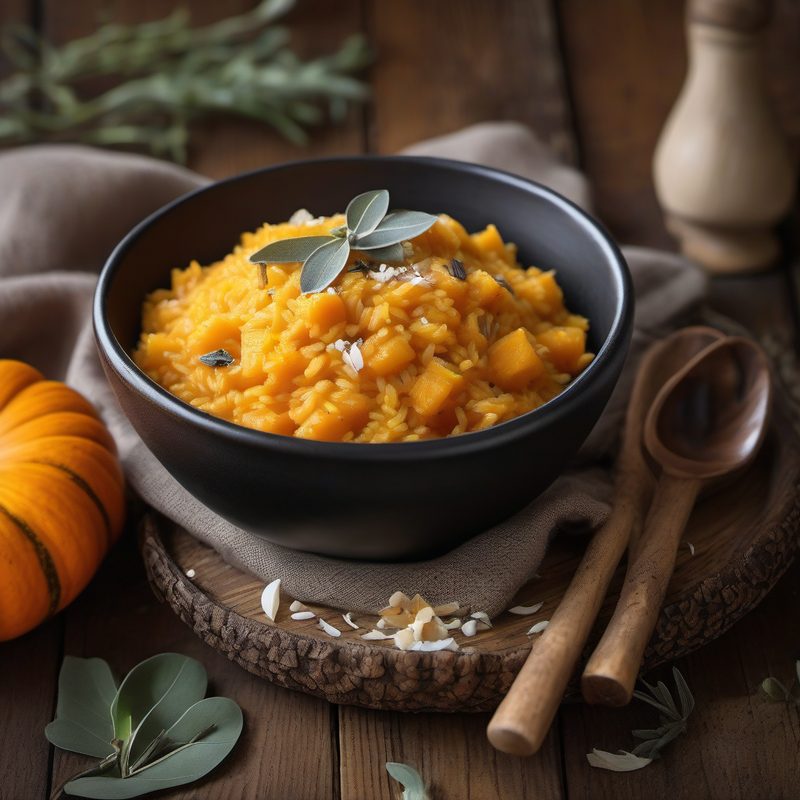
Pumpkin Risotto
The taste of autumn in a bowl — sweet roasted pumpkin folded into creamy Carnaroli rice, finished with Parmigiano and a drift of black pepper. A northern Italian classic that's simple enough for a weeknight, elegant enough for company.
| Amount | Ingredient |
|---|---|
| 1½ cups (320 g) | Carnaroli rice |
| 1 small (750 g / 1.6 lb) | Delica or butternut squash |
| 1 (100 g) | red onion, finely chopped |
| 6 cups (1.5 l) | vegetable broth, hot |
| ¾ cup (80 g) | Parmigiano Reggiano, grated |
| ¼ cup (60 ml) | dry white wine |
| 3½ tbsp (50 g) | butter |
| extra-virgin olive oil | |
| kosher salt, to taste | |
| freshly ground black pepper, to taste |
Pumpkin risotto is one of the great comfort dishes of northern Italy — the kind of recipe that changes subtly in every kitchen and is perfect in all of them. Here, delicate squash is cooked slowly until it collapses into a naturally sweet, silky purée, while the rice is toasted separately and finished with a splash of white wine before meeting the pumpkin. The result is a deeply orange, velvety risotto where the vegetable isn't just an ingredient — it becomes the sauce itself. Finish with butter, Parmigiano, and black pepper, and you have the essence of autumn on a spoon.
Ingredient notes: Delica squash (a green-skinned Japanese variety common in Italy) is ideal — dense, sweet, and deeply orange. Butternut squash is the easiest substitute in American supermarkets. You'll use about 600 g (1.3 lb) of squash flesh after peeling and seeding. The onion is cooked "dolcissimo" — at the gentlest heat — until it melts, so give it time.
- Large, heavy-bottomed sauté pan or Dutch oven
- Second saucepan (for toasting the rice and keeping broth hot)
- Wooden spoon or heatproof spatula
- Chef's knife and cutting board
- Fine grater or Microplane (for Parmigiano)
- Prepare the squash (10 min). Peel the squash, halve it, and scoop out the seeds. Cut the flesh into ½-inch (1.5 cm) cubes — you should have about 600 g (4 cups).
- Soften the onion (10 min). Heat a generous splash of olive oil in the large pan over the gentlest heat. Add the finely chopped onion and cook for about 10 minutes, stirring, until it is so soft it nearly melts. A pinch of salt helps draw out the moisture. Do not let it color.
- Cook the squash (20 min). Add the cubed squash and sauté for a few minutes, stirring so it doesn't stick. Begin adding hot broth, one ladle at a time, letting it absorb gradually. Cook for about 20 minutes, until the squash is completely tender and beginning to break down into a creamy mass.
- Toast the rice (3 min). Meanwhile, heat a second pan and add the rice dry (no oil). Toast over high heat, stirring often, until the grains are too hot to hold in your fist — 2–3 minutes. Deglaze with the white wine and stir immediately to prevent sticking. Once the wine has evaporated, transfer the rice to the pan with the squash.
- Cook the risotto (15–20 min). Stir the rice into the squash, then continue cooking, adding hot broth as needed, until the rice is al dente — 15–20 minutes depending on the rice.
- Mantecatura (2 min). Off the heat, add the butter and grated Parmigiano. Season with black pepper and salt to taste, and stir vigorously until glossy and creamy. For a looser, all'onda risotto, add one more ladle of broth.
- Rest and serve (2 min). Let rest for 1–2 minutes, then spoon into warm bowls and serve immediately.
- Roast the squash for extra depth. For an even sweeter, more concentrated flavor, toss the cubed squash with olive oil and roast at 400°F (200°C) for 20–25 minutes before adding it to the pan.
- Patience with the onion. Ten minutes over low heat may feel long, but a properly melted onion is the foundation of the dish's sweetness.
- Toast the rice separately. The dry toasting method — no oil — gives the grains a firmer structure so they hold their shape through the long cooking.
- The squash is the sauce. Don't drain it or cook it separately; letting it break down into the broth creates the naturally creamy texture.
- Season at the end. The Parmigiano adds salt; taste after the mantecatura before adding more.
- Choose the right squash. Delica, butternut, and kabocha are all sweet and dense. Avoid watery varieties like spaghetti squash.
| Mistake | Why It Hurts | The Fix |
|---|---|---|
| Using a watery squash variety | The risotto turns thin and bland | Choose dense, sweet squash — Delica, butternut, or kabocha |
| Browning the onion | Bitter notes that clash with the sweet squash | Cook the onion at the gentlest heat until it melts, never browns |
| Adding the squash too late | Hard cubes of pumpkin in a creamy risotto | Cook the squash fully before adding the rice |
| Skipping the dry toast | The rice softens too fast and turns mushy | Toast the rice separately until the grains are hot to the touch |
| Overcooking the rice | A starchy, porridge-like texture | Taste at 15 minutes and stop at al dente |
| Forgetting the wine | Loses the bright acidity that balances the sweetness | Always deglaze with white wine after toasting |
- Sage and Brown Butter: Melt the mantecatura butter in a small pan until nutty and brown, add a handful of fresh sage leaves, and drizzle over the finished risotto.
- Amaretti Crunch: Crumble 4–5 amaretti cookies over each serving — a classic Emilia-Romagna garnish that adds a bittersweet almond crunch.
- Gorgonzola: Fold 100 g (about 3½ oz) of crumbled gorgonzola dolce into the mantecatura for a sweet-sharp blue cheese contrast.
- Chestnuts: Add 100 g (about ¾ cup) of cooked, roughly chopped chestnuts with the rice — a deeply autumnal, almost meaty version.
- Crispy Pancetta: Top with crispy pancetta or bacon lardons for a savory-salty counterpoint.
- Spicy: Add a pinch of red pepper flakes with the squash for gentle warmth.
| Storage Method | Details |
|---|---|
| Refrigerator | Store in an airtight container for up to 2 days. Add a splash of hot broth when reheating to restore the creamy texture. |
| Freezer | Not recommended — the rice breaks down and the emulsion separates on thawing. |
| Reheating | Warm gently in a skillet with a splash of hot broth, stirring until creamy. |
This is a sweet, velvety risotto — reach for wines that balance richness with a little freshness:
- Valpolicella Classico — Light-bodied red with soft cherry fruit that loves sweet squash.
- Lugana (Lombardy) — Creamy, slightly nutty white, a natural match for pumpkin.
- Pinot Grigio (Alto Adige) — Crisp and clean, it cuts through the richness.
- Franciacorta Brut — Bubbles and acidity lift the creamy texture.
- Off-Dry Riesling (Mosel or Finger Lakes) — A touch of residual sugar echoes the squash's sweetness.
| Per Serving (about 1¼ cups) | |
|---|---|
| Calories | 520 |
| Protein | 12 g |
| Fat | 19 g |
| Carbohydrates | 75 g |
| Fiber | 5 g |
Nutrition values are approximate and will vary with the squash variety and substitutions.
Can I use canned pumpkin purée?
Yes, in a pinch — add 1½ cups (about 375 g) of plain canned pumpkin purée (not pumpkin pie filling) after softening the onion, and reduce the broth by about 1 cup. The texture will be a bit less structured but still delicious.
What is Delica squash?
A Japanese kabocha-type squash with green skin and deep orange, very sweet flesh — widely used in Italian cooking. Butternut squash is the closest American equivalent.
Why do you toast the rice without oil?
The "tostatura a secco" (dry toasting) method seals the outer layer of each grain so it cooks to a creamy exterior while keeping a firm center — a technique many northern Italian cooks prefer for risotto.
Can I make this ahead?
The squash and onion base can be cooked a day ahead and refrigerated. The risotto itself is best finished and served immediately.
Can I use vegetable stock from a cube?
Yes — use a good-quality vegetable bouillon, but be aware the finished risotto will be slightly saltier; adjust the salt at the end accordingly.
- Saffron Risotto alla Milanese (Volume 3)
- Gorgonzola Risotto (Volume 3)
- Porcini Mushroom Risotto (Volume 3)
- Roasted Tomato Sauce (Volume 2)
Recipe from "The Italian Kitchen" by Vita Milanese — Volume 3: Risotto & Rice
Recipe from The Italian Kitchen by Vita Milanese — Volume 3 · Risotto & Rice. Discover all volumes on the ebook page.