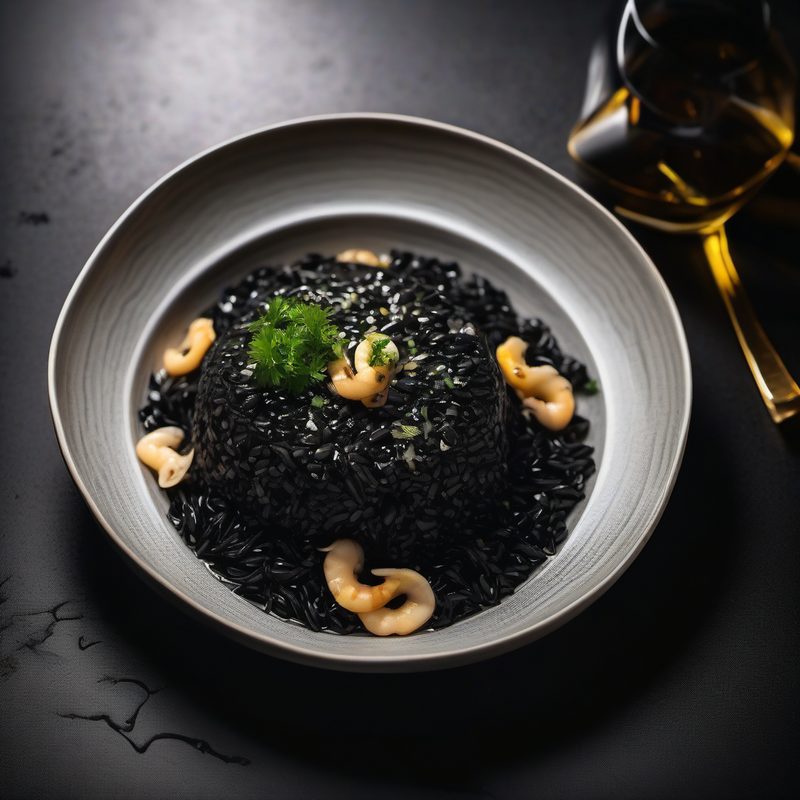
Squid Ink Risotto
A dramatic, jet-black risotto that tastes of the sea — tender cuttlefish, squid ink, and white wine in a glossy, briny masterpiece that looks as stunning as it tastes.
| Amount | Ingredient |
|---|---|
| 1½ cups (320 g) | Vialone Nano rice |
| 10 oz (300 g) | small cuttlefish (seppie), cleaned |
| 0.6 oz (16 g) | squid ink (about 4 sachets) |
| 4 cups (1 l) | fish stock (fumetto), hot |
| 1 glass (150 ml) | dry white wine |
| 1 clove | garlic, peeled |
| extra-virgin olive oil | |
| fresh parsley, chopped | |
| fine salt, to taste |
There are few dishes as striking as risotto al nero di seppia: a mound of glossy, ink-black rice crowned with golden sautéed cuttlefish. The squid ink delivers a deep, briny, mineral flavor of the sea that no other ingredient can replicate, while the cuttlefish itself — half chopped into the risotto, half sliced thin and sautéed until golden — provides both body and a beautiful textural contrast. It's a Venetian and coastal Italian classic that turns a humble bowl of rice into theater.
Ingredient notes: Vialone Nano is the traditional rice here — its small grains absorb the broth beautifully and stay al dente. Squid ink is sold in small sachets (4 g each) at Italian grocers and fishmongers; use about 4 sachets. The cuttlefish is used two ways: half chopped for the risotto, half sliced thin and sautéed as a garnish. Fish stock (fumetto di pesce) is essential — water or chicken broth won't deliver the same sea flavor.
- Large, heavy-bottomed sauté pan or Dutch oven
- Medium saucepan (for the hot fish stock)
- Small frying pan (for the cuttlefish garnish)
- Wooden spoon or heatproof spatula
- Chef's knife and cutting board
- Prepare the cuttlefish (5 min). Separate the tentacles from the body. Chop about half of the cuttlefish into small cubes; slice the other half into thin strips. Make sure the fish stock is hot.
- Sauté the cubed cuttlefish (10 min). Heat olive oil in the pan with the garlic clove (in its skin, gently crushed). Let it perfume the oil, then add the cubed cuttlefish and sauté for about 10 minutes. Remove and discard the garlic.
- Toast the rice (2 min). Add the rice to the pan and toast over high heat, stirring often, until the grains turn translucent.
- Deglaze (1 min). Season with a pinch of salt, pour in the white wine, and stir until the alcohol has evaporated completely.
- Cook the risotto (15–18 min). Add the hot fish stock a ladle at a time, keeping the rice just covered without flooding it. Cook until al dente — 15–18 minutes.
- Sauté the garnish (4–5 min). Meanwhile, heat a little oil in a small pan, add the cuttlefish strips, and sauté for 4–5 minutes until well browned and golden. Chop the parsley.
- Add the ink (2 min). About 2 minutes before the rice is done, stir in the squid ink. Mix well, taste, and adjust salt if needed.
- Finish and serve (1 min). Add a thread of olive oil and most of the chopped parsley to emulsify. Plate the risotto, top with the golden cuttlefish strips in the center, sprinkle with remaining parsley, and finish with a drizzle of raw olive oil. Serve very hot.
- Use real squid ink. Nothing else gives the same deep, briny sea flavor. It's sold in small sachets — get the ones from a fishmonger for the best quality.
- Half in, half on top. Chopped cuttlefish perfumes the risotto as it cooks; thin strips sautéed until golden provide the beautiful, textural garnish.
- Don't flood the rice. Keep the rice just covered with stock — Vialone Nano absorbs slowly and benefits from a gentle hand.
- Add the ink at the end. The ink's color and flavor are best when added in the final 2 minutes, not at the start.
- Keep the stock hot. Cold stock interrupts cooking and makes the rice sticky.
- The garlic is a ghost. Cook it in its skin and remove it — it perfumes the oil without dominating.
| Mistake | Why It Hurts | The Fix |
|---|---|---|
| Using water instead of fish stock | A flat, dull risotto with no sea flavor | Use fish stock (fumetto) — it's the backbone of the dish |
| Adding ink too early | The flavor fades and the color dulls | Add the ink in the final 2 minutes of cooking |
| Overcooking the cuttlefish | Tough, rubbery seafood | Sauté the cubes 10 minutes; the thin strips only 4–5 |
| Flooding the rice | Watery risotto with mushy grains | Add stock one ladle at a time, just covering the rice |
| Skipping the golden garnish | Loses the textural contrast and visual pop | Always sauté thin cuttlefish strips until golden for the top |
- Squid Instead of Cuttlefish: Use small squid if cuttlefish isn't available — the flavor is similar, the texture slightly more delicate.
- Spicy: Add a pinch of red pepper flakes with the garlic for gentle heat.
- Lemon: Serve with lemon wedges — a squeeze of bright acidity lifts the briny richness.
- Creamy Finish: Add a small knob of cold butter at the mantecatura for an extra-glossy texture.
- Fried Garlic: Top with crispy fried garlic slices for crunch.
| Storage Method | Details |
|---|---|
| Refrigerator | Store in an airtight container for up to 2 days. Add a splash of hot fish stock or water when reheating. |
| Freezer | Not recommended — the rice breaks down on thawing. |
| Reheating | Warm gently in a skillet with a splash of hot stock, stirring until creamy. |
This is a briny, savory seafood risotto — choose wines that complement the sea:
- Lugana (Lombardy) — Creamy, mineral white that stands up to the ink's brininess.
- Soave Classico (Veneto) — The classic Venetian pairing, crisp and almond-toned.
- Vermentino (Liguria or Sardinia) — Saline and citrusy — a natural match for seafood.
- Franciacorta Brut — Bubbles and acidity refresh the palate between rich spoonfuls.
- Gavi di Gavi (Piedmont) — Elegant and mineral, with enough body for the dish.
| Per Serving (about 1¼ cups) | |
|---|---|
| Calories | 480 |
| Protein | 22 g |
| Fat | 12 g |
| Carbohydrates | 68 g |
| Fiber | 1 g |
Nutrition values are approximate and will vary with the cuttlefish and stock used.
Where do I find squid ink?
Italian grocers and good fishmongers sell it in small 4 g sachets. Some specialty supermarkets carry it near the seafood. Online retailers also stock it — look for "nero di seppia" or "squid ink."
Can I use regular rice instead of Vialone Nano?
Yes — Carnaroli or Arborio both work. Vialone Nano is traditional for seafood risottos because it absorbs broth without losing its shape.
Does squid ink taste fishy?
It's briny and mineral — like the essence of the sea — rather than "fishy." Cooked into the risotto it becomes deep, savory, and surprisingly mellow.
Is this dish very black?
Yes — that's the point! The dramatic jet-black color is part of the appeal. It does stain, so wear an apron and be careful with table linens.
Can I make it without the cuttlefish garnish?
Yes — the ink alone gives you the classic black risotto. The sautéed cuttlefish adds texture and beauty, but the dish works without it.
- Saffron Risotto alla Milanese (Volume 3)
- Seafood Risotto with Shrimp and Leeks (Volume 3)
- Roasted Tomato Sauce (Volume 2)
Recipe from "The Italian Kitchen" by Vita Milanese — Volume 3: Risotto & Rice
Recipe from The Italian Kitchen by Vita Milanese — Volume 3 · Risotto & Rice. Discover all volumes on the ebook page.