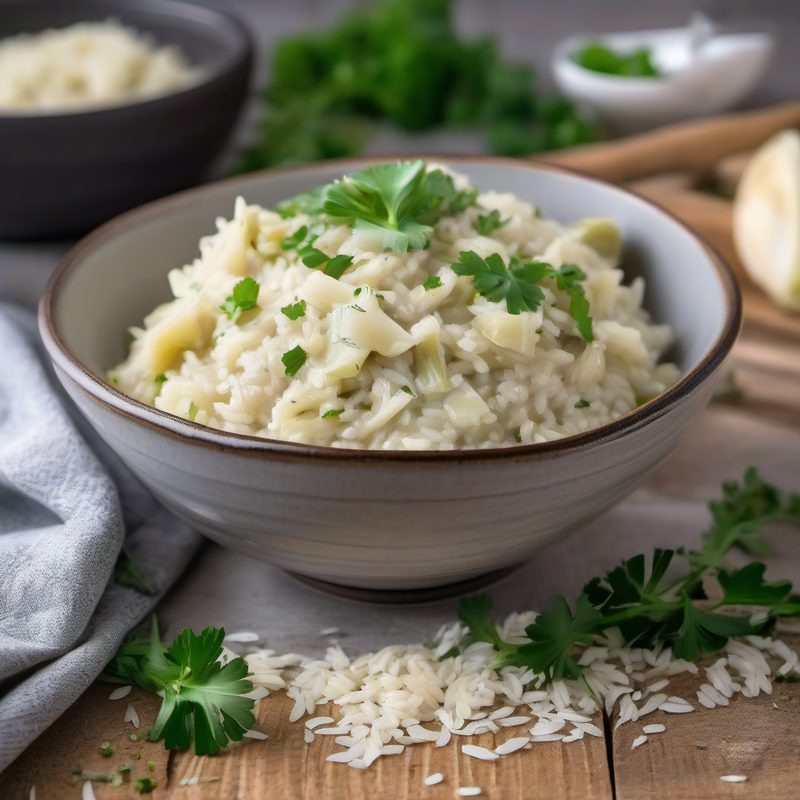
Artichoke Risotto (Risotto ai Carciofi)
A delicate, refined risotto where tender artichokes are sautéed with garlic instead of onion — a Roman technique that lets the artichoke's sweet, nutty flavor shine through every creamy spoonful.
| Amount | Ingredient |
|---|---|
| ¾ cup (160 g) | Carnaroli rice |
| 2 | fresh artichokes |
| ¼ cup (25 g) | Parmigiano Reggiano, grated |
| 1½ tbsp (20 g) | butter |
| 2 cloves (or 20 g shallot) | garlic |
| fresh parsley, chopped | |
| 1 | lemon |
| 4 cups (1 l) | vegetable broth, hot |
| 2 tbsp (30 ml) | extra-virgin olive oil |
| 1 cup (250 ml) | dry white wine |
| freshly ground black pepper (optional) |
Unlike most risottos, this one has no onion. Instead, garlic — or shallot — forms the soffritto, chosen specifically to complement the artichoke's subtle, nutty character. The artichokes are trimmed, sliced thin, and held in acidulated lemon water to keep them pale, then gently stewed before the rice joins them. A splash of white wine, a slow, patient simmer, and a final mantecatura of butter and Parmigiano produce a risotto that is quietly luxurious — the kind of first course that tastes like a spring day in Rome.
Ingredient notes: Choose heavy, tightly closed artichokes for the best flavor. The lemon is essential — it acidulates the water that keeps the sliced artichokes from browning. Garlic is the classic soffritto here (artichokes and garlic are natural partners), but shallot works beautifully if you prefer a milder base. This recipe intentionally skips onion entirely.
- Large, heavy-bottomed sauté pan or Dutch oven
- Medium saucepan (for the hot broth)
- Bowl of acidulated water (water + lemon juice)
- Wooden spoon or heatproof spatula
- Chef's knife and cutting board
- Prepare the artichokes (10 min). Trim the artichokes, keeping the first 4–5 cm (about 2 inches) of stem. Slice them thinly and place the slices in a bowl of water acidulated with lemon juice — this prevents browning.
- Sauté the aromatics (5 min). Finely chop the garlic (or shallot). Heat the olive oil in the pan and sauté the garlic for 5 minutes until fragrant but not colored.
- Stew the artichokes (5 min). Add the artichoke slices straight from the acidulated water (no rinsing — the lemon water seasons them). Cover and stew for 5 minutes.
- Deglaze the artichokes (3 min). Pour in a glass of white wine and continue cooking until the artichokes are al dente. Season with salt.
- Toast the rice (3 min). Add the rice, raise the heat, and toast for 3 minutes, stirring with a wooden spoon. Deglaze with the remaining wine and cook until fully absorbed.
- Cook the risotto (15 min). Lower the heat and cook the risotto for 15 minutes, adding one ladle of hot broth at a time — never add more until the previous ladle is fully absorbed — and stirring constantly.
- Mantecatura (3 min). Off the heat, stir in the butter and Parmigiano. Cover and let rest for about 3 minutes, then stir until glossy and creamy.
- Serve (1 min). Plate and garnish each portion with chopped parsley, a grinding of black pepper, and extra grated Parmigiano at the table.
- Acidulated water is non-negotiable. Artichokes oxidize and turn gray-brown within minutes of cutting. Lemon water keeps them pale, bright, and beautiful.
- Don't rinse the artichokes. Adding them to the pan straight from the lemon water seasons them and helps them keep their color.
- Garlic over onion, always. The recipe deliberately skips onion — garlic (or shallot) flatters the artichoke's delicate flavor without overpowering it.
- Trim generously. Remove the tough outer leaves and any fibrous parts; only the tender heart and inner leaves should remain.
- Keep the broth hot. The constant stirring method needs hot broth — cold broth slows cooking and makes the rice sticky.
- Rest before serving. The 3-minute rest under the lid lets the mantecatura fully emulsify.
| Mistake | Why It Hurts | The Fix |
|---|---|---|
| Skipping the lemon water | Gray, oxidized artichokes that look unappetizing | Always keep sliced artichokes in acidulated water |
| Using onion | Overpowers the delicate artichoke flavor | Use garlic or shallot, never onion |
| Rinsing the artichokes | Washes away the lemon seasoning and pale color | Add them straight from the acidulated water |
| Adding broth too fast | Watery, unevenly cooked risotto | One ladle at a time, waiting for full absorption |
| Overcooking the artichokes | They turn to mush and lose their texture | Cook until al dente, then let the rice take over |
| Burning the garlic | Bitter notes ruin the whole dish | Sauté gently, 5 minutes, until fragrant but pale |
- Artichoke and Mint: Add a handful of fresh mint leaves with the parsley — a Roman pairing that brightens the whole dish.
- Shrimp: Sauté 200 g (about 7 oz) of peeled shrimp with the artichokes for a seafood version.
- Taleggio: Substitute taleggio for half the Parmigiano at the mantecatura for a stretchy, pungent creaminess.
- Lemon Zest: Fold in the zest of half a lemon at the end for extra brightness.
- Crispy Artichoke Garnish: Fry extra thin artichoke slices until golden and use as a crunchy topping.
| Storage Method | Details |
|---|---|
| Refrigerator | Store in an airtight container for up to 2 days. Add a splash of hot broth when reheating. |
| Freezer | Not recommended — the rice breaks down and the emulsion separates on thawing. |
| Reheating | Warm gently in a skillet with a splash of hot broth, stirring until creamy. |
This is a delicate, refined risotto — choose wines with finesse:
- Frascati Superiore (Lazio) — The classic Roman pairing, crisp and lightly floral.
- Gavi di Gavi (Piedmont) — Mineral and elegant, with enough body for the creamy rice.
- Verdicchio dei Castelli di Jesi — Bright, nutty, and refreshing.
- Pinot Grigio (Alto Adige) — Clean and light, it lets the artichoke shine.
- Vermentino (Sardinia or Liguria) — Saline and citrusy — a lovely modern match.
| Per Serving (about 1 cup) | |
|---|---|
| Calories | 390 |
| Protein | 9 g |
| Fat | 14 g |
| Carbohydrates | 55 g |
| Fiber | 3 g |
Nutrition values are approximate and will vary with brand choices and substitutions.
Can I use canned or jarred artichokes?
Yes, in a pinch — use well-drained artichoke hearts in oil or water and skip the lemon-water step. The flavor will be softer than fresh, but the dish still works.
Why does this risotto skip the onion?
Artichokes have a delicate, nutty flavor that onion can overwhelm. Garlic (or shallot) complements them without competing — it's a classic Roman technique.
How do I clean artichokes properly?
Pull off the tough outer leaves, trim the stem, cut off the spiky top, and scoop out the fuzzy choke. Keep the tender inner leaves and heart, slice thin, and drop into lemon water immediately.
Can I use the whole artichoke?
Only the tender parts — outer leaves and the fuzzy choke are fibrous and unpleasant. Save trimmings for broth if you like.
Is this risotto vegetarian?
Yes — with vegetable broth it's fully vegetarian. Add shrimp or pancetta if you want a heartier version.
- Saffron Risotto alla Milanese (Volume 3)
- Radicchio and Taleggio Risotto (Volume 3)
- Artichoke Stem Hummus (Volume 2)
Recipe from "The Italian Kitchen" by Vita Milanese — Volume 3: Risotto & Rice
Recipe from The Italian Kitchen by Vita Milanese — Volume 3 · Risotto & Rice. Discover all volumes on the ebook page.