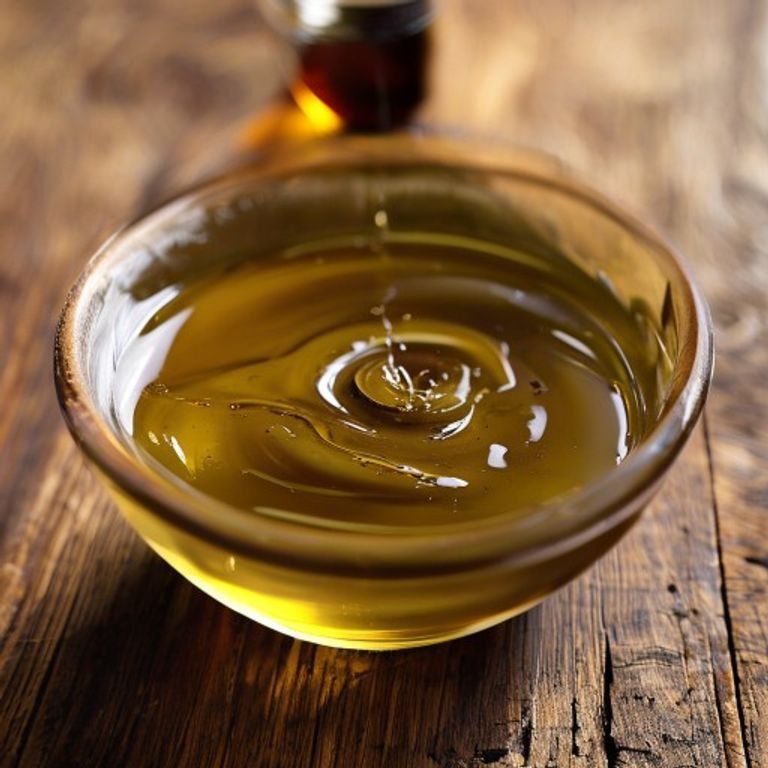
Italian Vinaigrette
A masterclass in simplicity — a three-ingredient balsamic vinaigrette that proves the best dressings need nothing more than exceptional olive oil, aged balsamic vinegar, and a pinch of fleur de sel, unified by the singular act of emulsification.
| Amount | Ingredient |
|---|---|
| Dumping all the oil in at once | No emulsion forms — you end up with a separated puddle of oil and vinegar that slides off the greens Drizzle the oil slowly while whisking constantly; if it separates anyway, transfer to a jar and shake vigorously |
| Using fine table salt instead of fleur de sel | No textural contrast, and the salt dissolves completely into the vinegar instead of providing bursts of flavor Use fleur de sel, Maldon, or another flaky sea salt — the texture is part of the experience |
| Dressing wet greens | The dressing slides off the leaves and pools at the bottom of the bowl, leaving undressed patches Spin-dry greens thoroughly in a salad spinner, then pat dry with a kitchen towel |
| Dressing too far in advance | The greens wilt, the dressing separates, and the salad becomes a sad, soggy mess Dress the salad no more than 5 minutes before serving; toss again just before bringing to the table |
| Over-dressing | Greens become greasy, heavy, and soggy — the dressing overwhelms rather than enhances Use a light hand; you can always add more, but you cannot take it away. Start with less than you think you need |
| Using poor-quality olive oil | The dressing tastes bitter, metallic, or flat — the olive oil is the largest component by volume and its quality defines the final result Taste your olive oil alone first; if you would not eat it on bread, do not use it in this dressing |
| Skipping the pepper | Flat, one-dimensional dressing without any aromatic warmth or spice Freshly cracked black pepper is a structural element here, not a garnish — do not skip it |
This is the condimento all'italiana — the Italian dressing — in its purest, most essential form. Where bottled supermarket "Italian dressing" is a muddy list of stabilizers, gums, and artificial flavors, this is its Platonic ideal: just balsamic vinegar, extra-virgin olive oil, and a delicate finishing salt. There is no mustard, no garlic, no herbs, no sugar — nothing to distract from the quality of its three components. The balsamic brings sweetness, acidity, and depth; the olive oil brings fruitiness, body, and a peppery finish; the fleur de sel provides a crystalline crunch and a mineral salinity that makes every flavor sing. It is the dressing equivalent of a perfect _cacio e pepe_ — so simple that it demands the finest ingredients, and so perfect that it needs nothing else.
Ingredient notes: The quality of each ingredient matters enormously here — there is nowhere to hide. Use an aged balsamic vinegar from Modena or Reggio Emilia; the younger _condimento-grade_ balsamics work well too, but avoid cheap industrial balsamic that is little more than colored vinegar with thickeners. For the olive oil, choose a high-quality extra-virgin that you enjoy drinking on its own — a grassy, peppery Tuscan or a fruity, buttery Ligurian both work beautifully. Fleur de sel (flower of salt) is the ideal finishing salt for its delicate crunch and pure salinity; Maldon sea salt flakes or a high-quality _fior di sale_ are excellent substitutes. Do not use fine table salt, which dissolves instantly and lacks the textural contrast. The proportion is a classic 2:1 oil-to-vinegar ratio — a more acidic 3:2 ratio works if you prefer a sharper dressing.
- Small bowl
- Whisk or small fork
- Chef's knife
- Cutting board
- Measuring spoons
- Small jar with tight-fitting lid (optional, for shaking)
- Salad spinner (for drying greens)
- Prepare the base (30 seconds). Pour the balsamic vinegar into a small bowl. Add the fleur de sel and a generous few turns of freshly cracked black pepper. Let it sit for 30 seconds to allow the salt to begin dissolving into the vinegar. Pro tip: The fleur de sel will not fully dissolve in the vinegar — this is intentional. Its crystalline texture provides occasional bursts of salt that contrast beautifully with the smooth emulsion. If you prefer a completely homogeneous dressing, use a fine sea salt instead, but you will lose the textural contrast.
- Emulsify (1 minute). While whisking the vinegar mixture constantly with a fork or small whisk, begin drizzling the olive oil in a slow, steady stream. Whisk vigorously and continuously, making sure each addition of oil is fully incorporated before adding more. After about half the oil, the dressing will begin to thicken and lighten in color as the emulsion forms. Continue whisking and drizzling until all the oil is incorporated and the dressing is thick, glossy, and slightly creamy — it should coat the back of a spoon and look opaque rather than translucent. Pro tip: A slow, steady drizzle is essential — if you pour all the oil in at once, the emulsion will not form and you will have a separated puddle of oil and vinegar instead of a creamy dressing. If you prefer an even more hands-off method, combine all ingredients in a small jar, seal tightly, and shake vigorously for 20 to 30 seconds until emulsified. The shaking method produces a slightly less stable emulsion but is equally delicious and significantly easier.
- Taste and adjust (30 seconds). Dip a clean leaf of lettuce (or the back of a spoon) into the dressing and taste. The dressing should be balanced — the sweetness and acidity of the balsamic should meet the fruitiness of the olive oil, with the salt and pepper providing structure. If it tastes too sharp, add a drizzle more oil. If it tastes flat, add a few drops more vinegar. If it needs more pop, add a pinch more fleur de sel or a few more cracks of pepper. Pro tip: Remember that greens contain water, which will dilute the dressing slightly once tossed. The dressing should taste slightly more acidic and salty in the bowl than you expect it to taste on the salad — this dilution effect means the final dressed salad will be perfectly balanced.
- Dress and serve immediately (1 minute). Place your salad greens in a large bowl. Drizzle the dressing over the greens — you will not need all of it for a single salad; use about 1 to 2 tablespoons per serving and save the rest. Toss gently with your hands or salad tongs until every leaf is lightly, evenly coated. Serve immediately. Pro tip: Dress the salad just before serving — dressed greens wilt within minutes. If you are making a composed salad (rather than tossed greens), drizzle the dressing over the top just before bringing to the table. Leftover dressing keeps at room temperature for a few hours; shake or whisk to re-emulsify before using again.
- Over a simple mixed green salad (mesclun, arugula, or tender lettuce leaves)
- Drizzled over ripe heirloom tomatoes with fresh basil (a classic _Insalata Caprese_ dressing)
- As a finishing drizzle over grilled vegetables — zucchini, eggplant, bell peppers, asparagus
- Over a bed of _rucola_ (arugula) with shaved Parmigiano-Reggiano
- Drizzled over poached or grilled white fish (branzino, sea bass, cod)
- Over a simple bean salad (cannellini or chickpeas with parsley)
- As a dip for crusty bread — the olive oil and vinegar unite in a single spoonful
- Over cold roast chicken or leftover steak for a bright, acidic contrast
- As a dressing for farro, barley, or quinoa salads with cherry tomatoes and herbs
- Drizzled over steamed artichokes or asparagus as a bright finishing touch
- The 2:1 ratio is the classic starting point. Two parts oil to one part vinegar creates a balanced, crowd-pleasing dressing. For a sharper, more acidic dressing (excellent with bitter greens like radicchio or endive), use a 3:2 ratio (3 tbsp oil to 2 tbsp vinegar). For a milder dressing (good with delicate greens like butter lettuce), use a 3:1 ratio.
- Use the best ingredients you can afford. This dressing has only three ingredients (plus pepper). Every single one of them is visible in the final result. If the olive oil is mediocre, the dressing will taste mediocre. If the balsamic is thin and sour, the dressing will taste thin and sour. This is not a dressing for budget ingredients — save the cheap olive oil for cooking and the cheap vinegar for marinades.
- Fleur de sel is not a gimmick. The delicate, moist crystals of fleur de sel dissolve slowly on the tongue, providing bursts of salt that punctuate each bite of salad. Regular table salt dissolves instantly and provides none of this textural pleasure. The difference is subtle but real — try both side by side and you will taste it immediately.
- Emulsify fresh for each use if possible. Unlike mayonnaise-based dressings, this simple vinaigrette will separate within 15 to 30 minutes. While it can be re-emulsified by shaking or whisking, it is at its creamiest and most beautiful in the first few minutes after emulsification.
- Room-temperature ingredients emulsify better. Cold olive oil is thicker and resists emulsification. If your oil is cold, let it sit at room temperature for 15 minutes before starting. The vinegar and oil should both be at room temperature for the best emulsion.
- Wet greens are the enemy of good dressing. Even the perfect vinaigrette will slide off wet lettuce leaves and pool sadly at the bottom of the bowl. Wash and thoroughly dry your greens — a salad spinner is the best tool for this, followed by a quick pat with a clean kitchen towel.
| Mistake | Why It Hurts | The Fix |
|---|
- Garlic Balsamic Vinaigrette: Add ½ small garlic clove, grated on a Microplane, to the vinegar before emulsifying. Let it sit for 2 minutes to mellow the raw garlic bite before adding the oil. The garlic infuses the entire dressing with a gentle savory warmth.
- Herb Balsamic Vinaigrette: Add 1 teaspoon of finely chopped fresh herbs (basil, oregano, or thyme — or a combination) to the finished dressing. The herbs add freshness and complexity while keeping the dressing fundamentally simple.
- Honey Balsamic Vinaigrette: Whisk ½ teaspoon of honey into the vinegar before adding the oil. The honey accentuates the natural sweetness of the aged balsamic and softens the acidity beautifully — excellent with bitter greens or aged cheeses.
- Lemon-Balsamic Vinaigrette: Replace 1 tablespoon of the balsamic vinegar with 1 tablespoon of fresh lemon juice. The combination of balsamic sweetness and lemon brightness creates a more complex, layered acidity.
- Shallot Balsamic Vinaigrette: Add 1 teaspoon of finely minced shallot to the vinegar before emulsifying. Let it steep for 5 minutes to soften the shallot's bite before adding the oil. The shallot adds a gentle allium sweetness without overpowering.
- Spicy Balsamic Vinaigrette: Add a pinch of red pepper flakes or ⅛ teaspoon of Calabrian chili paste to the vinegar before emulsifying. The gentle heat contrasts beautifully with the sweet balsamic and fruity olive oil.
- Balsamic-Mustard Vinaigrette: Add ½ teaspoon of Dijon mustard to the vinegar before emulsifying. The mustard acts as an additional emulsifier (making the dressing creamier and more stable) while adding a gentle tangy warmth.
- Creamy Balsamic Vinaigrette: Add 1 tablespoon of plain yogurt or sour cream to the finished dressing and whisk until smooth. The dairy rounds out the acidity and adds a luxurious creaminess.
| Storage Method | Details |
|---|---|
| Room Temperature (Day Of) | Store at room temperature for up to 4 hours. The emulsion will separate; shake vigorously or whisk to re-emulsify before using. |
| Refrigerator | Not recommended for this simple vinaigrette — cold temperatures cause the olive oil to thicken and solidify, and the emulsion will separate completely. If you must refrigerate, warm to room temperature and re-emulsify before using. Best made fresh. |
| Best By | The dressing is at its peak within the first hour of emulsification. After 2 to 3 hours at room temperature, the emulsion weakens noticeably. |
| Re-emulsifying | Shake vigorously in a sealed jar for 15 to 20 seconds, or whisk in a bowl for 30 seconds. A single drop of cold water can help restart a stubbornly separated emulsion. |
| Make-Ahead | For the best results, make this dressing just before serving. If you need to prepare ahead, measure the vinegar, salt, and pepper into a jar and add the oil just before serving — then shake to emulsify. This takes 30 seconds and guarantees a perfect, fresh dressing. |
This simple dressing pairs beautifully with the wines it accompanies on the table. Consider the salad course as a palate primer:
- Lambrusco (Emilia-Romagna, chilled) — The slight chill, gentle bubbles, and tart red fruit of Lambrusco are a perfect match for the sweet-sour balsamic and fruity olive oil. The bubbles also help cut through the oil, refreshing the palate between bites. A classic pairing from balsamic's home region.
- Soave (Veneto) — Clean, crisp, and mineral-driven, with notes of white flowers and almond. Its zesty acidity mirrors the vinegar's brightness without competing, while its light body lets the dressing remain the star.
- Pinot Grigio (Friuli or Trentino-Alto Adige) — Dry, crisp, and unoaked, with citrus and green apple notes. A neutral, refreshing partner that cleanses the palate between bites of dressed greens.
- Verdicchio (Marche) — More structured than Pinot Grigio, with a pleasant almondy bitterness (amarognolo) that complements the peppery finish of a good Tuscan olive oil. Excellent with arugula or radicchio-based salads.
- Gavi di Gavi (Piedmont) — Elegant and floral, with crisp acidity and a subtle mineral finish. Pairs beautifully with delicate greens and the fruity notes of a Ligurian olive oil.
- Franciacorta Brut (Lombardy, sparkling) — Italy's answer to Champagne. The brisk acidity and fine bubbles cut through the olive oil beautifully, making this an elegant choice for a first-course salad. Serve very cold.
- For a red option with bitter greens: A light, chilled Bardolino or a young Valpolicella — serve cool (55°F / 13°C) to complement radicchio, endive, or arugula salads dressed with this vinaigrette.
| Per Serving (about 1½ tablespoons / 22 ml) | |
|---|---|
| Calories | 119 |
| Protein | 0 g |
| Fat | 13.5 g |
| Carbohydrates | 1 g |
| Fiber | 0 g |
| Sugar | 1 g |
Nutrition values are approximate and based on a 1½-tablespoon serving. Actual values vary based on the specific balsamic vinegar and olive oil used. The dressing is high in healthy monounsaturated fats from the extra-virgin olive oil.
Why is this dressing so simple? Why no garlic, herbs, or mustard?
This is the Italian approach to salad dressing at its most fundamental — the philosophy is that a salad of good, fresh greens does not need a complex dressing; it needs a simple, high-quality emulsion that enhances rather than masks the flavor of the leaves. Garlic, herbs, and mustard are wonderful additions — and are covered in the variations above — but they are additions, not necessities. The pure, three-ingredient version lets you taste the quality of your olive oil and balsamic vinegar directly, and it pairs more broadly with different types of salads and mains.
Can I use white balsamic vinegar instead?
Yes. White balsamic vinegar (aceto balsamico bianco) is made from the same grapes but is cooked under pressure to prevent caramelization, resulting in a pale, milder, slightly sweeter vinegar. The dressing will be visually much lighter (almost clear) and taste subtly different — less complex and syrupy, but brighter and more versatile for delicate salads where you do not want the dark color of traditional balsamic.
My dressing always separates. What am I doing wrong?
Nothing — separation is natural. A simple oil-and-vinegar vinaigrette without an additional emulsifier (like mustard, egg yolk, or honey) will always eventually separate. The key is to accept this and either (a) emulsify it fresh each time with a whisk, (b) use the jar-shaking method and shake it just before serving, or (c) add a tiny amount of an emulsifier like Dijon mustard (see the Balsamic-Mustard Vinaigrette variation). For the purposes of this pure version, separation is not a mistake — it is physics. Just shake or whisk it back together.
Is the 2:1 oil-to-vinegar ratio fixed?
It is the classic starting point for a balsamic vinaigrette, but it is not a rule. The balsamic's sweetness and thickness mean it can handle a wider range than white wine or cider vinegar. Try a 3:1 ratio for a milder dressing (good with delicate butter lettuce or as a finishing drizzle), or a 1:1 ratio for an intensely acidic dressing (excellent with fatty meats, strong cheeses, or bitter greens like radicchio and Belgian endive). Adjust to your palate and to the specific ingredients you are using.
How do I make a large batch for a party?
Simply scale the ingredients proportionally. For a party-size batch (about 1 cup / 240 ml), use ⅓ cup aged balsamic vinegar, ⅔ cup extra-virgin olive oil, 1 teaspoon fleur de sel, and ½ teaspoon cracked black pepper. Combine all ingredients in a jar, seal tightly, and shake vigorously for 30 seconds. This keeps at room temperature for the duration of a party; shake before each use to re-emulsify.
What kind of olive oil is best for this dressing?
A medium-intensity extra-virgin olive oil that is fruity, grassy, and slightly peppery on the finish. Tuscan oils (with their characteristic peppery, artichoke-like finish) are a classic choice. A Ligurian oil (delicate, buttery, and herbal) is also beautiful and pairs wonderfully with delicate greens. Avoid intensely bitter or aggressively peppery oils (some Sicilian or Pugliese oils) that can overwhelm the balsamic, as well as very mild, buttery oils (some French or Californian oils) that can disappear against the vinegar's acidity. The perfect oil for this dressing is one you would happily eat on good bread.
Can I use this dressing as a marinade?
Yes, with one caveat: because the dressing contains no emulsifier beyond the temporary whisking, it will separate completely during marination. This is not a problem — simply toss the meat or vegetables in the vinaigrette, let them marinate at room temperature for 15 to 30 minutes (or refrigerated for up to 2 hours), then grill or roast. The balsamic adds a beautiful sweet-sour glaze as it reduces during cooking. This is particularly excellent with chicken thighs, pork chops, or portobello mushrooms.
- Balsamic Glaze Reduction (Volume 2, Recipe #110)
- Classic Balsamic Marinade (Volume 2, Recipe #111)
- Lemon-Pepper Vinaigrette (Volume 2)
- French-Style Vinaigrette Sauce (Volume 2, Recipe #96)
- Italian Salsa Verde (Volume 2)
- Roasted Garlic & Balsamic Dressing (Volume 2)
Recipe from "The Italian Kitchen" by Vita Milanese — Volume 2: Sunday Sauce
Recipe from The Italian Kitchen by Vita Milanese — Volume 2 · Sunday Sauce. Discover all volumes on the ebook page.